Tolkien Book Auctions: How They Work, Where to Look, and How to Bid with Confidence
Understanding the Auction Market
Auctions are one of the most important sources for rare and collectible Tolkien books. While marketplaces and dealers offer a steady flow of material, the most exceptional items — first editions in fine condition, signed copies, manuscripts, association copies and unique pieces — often appear at auction.
For collectors, auctions offer something different: access to material that may not appear again for years. They also provide a transparent view of the market, as prices are determined in real time by competing bidders.
At the same time, auctions require a different approach. Understanding how they work, where to find them and how to bid carefully is essential before taking part.
The Major Auction Houses
The most important Tolkien material is typically handled by established international auction houses. These include Christie’s, Sotheby’s, Bonhams and other specialised firms.
These houses handle high-end books, manuscripts and literary archives. Their catalogues are carefully prepared, with detailed descriptions, provenance information and professional photography.
For collectors, these auctions represent the top of the market.
Important Tolkien books — especially signed copies, presentation copies and exceptional first editions — are most likely to appear here.
Unlike general marketplaces, these auctions are curated. Fewer items are offered, but the overall quality is significantly higher.
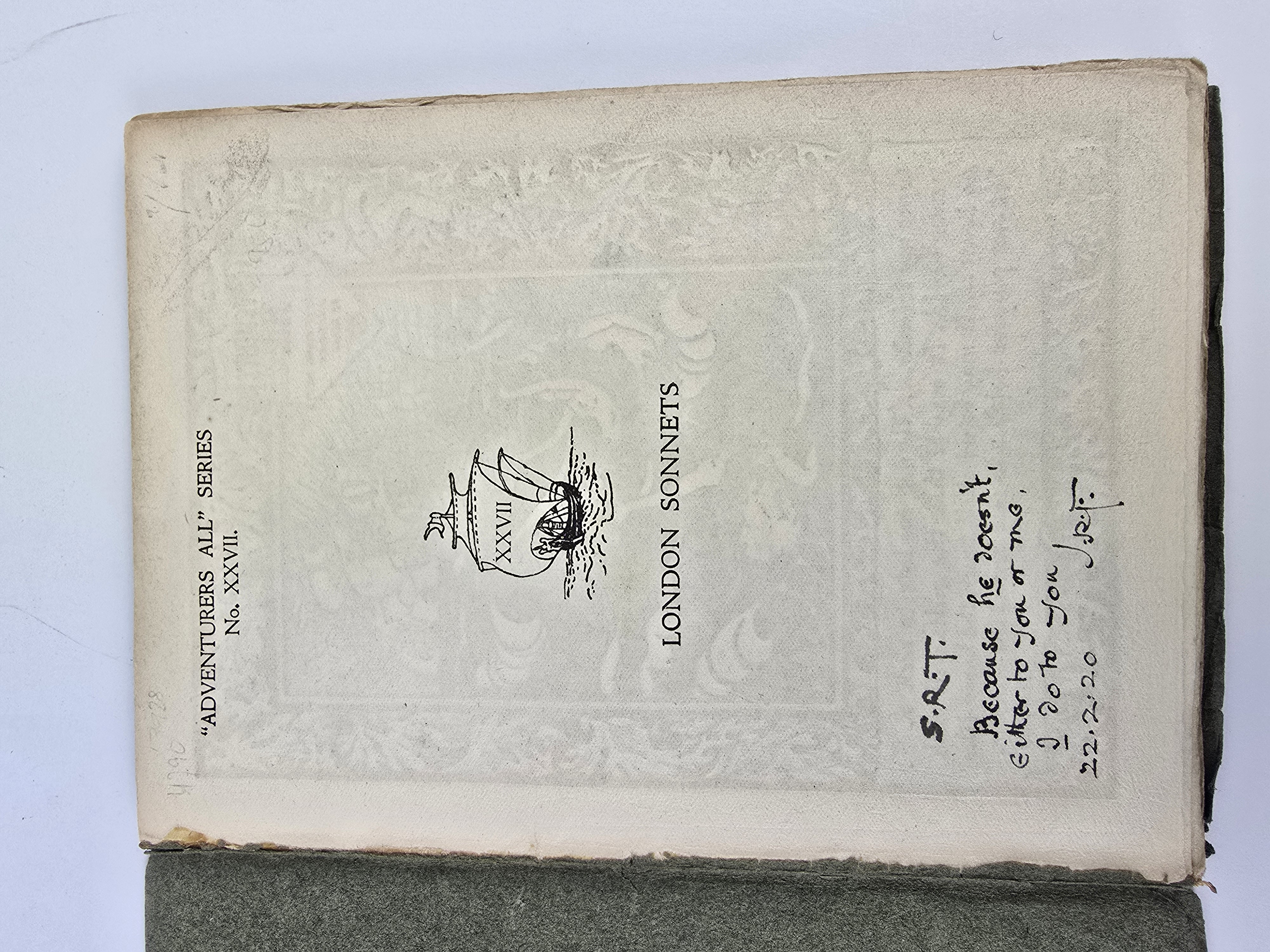
Early Tolkien inscription (1920) — material typically only encountered at major auction houses.
Finding Auctions and Upcoming Lots
One of the challenges in auction collecting is knowing what is coming up. Important books are often announced weeks in advance, and missing that window can mean missing the opportunity entirely.
Several platforms help collectors track upcoming auctions across multiple houses. These include aggregator sites such as LiveAuctioneers, Invaluable and Barnebys, which allow you to search across many auction catalogues at once.
Using these tools alongside meta search tools and search tips can help you stay informed about what is about to come on the market.
Seasonal Auctions and Key Moments
The auction calendar follows certain patterns. One of the most important periods is the end of the year, when many major houses organise their winter or “Christmas” sales.
These auctions often include some of the strongest material of the year. Collectors and institutions bring significant items to market during this period, making it one of the best moments to find rare Tolkien books.
Understanding this rhythm helps collectors plan ahead, both financially and strategically.
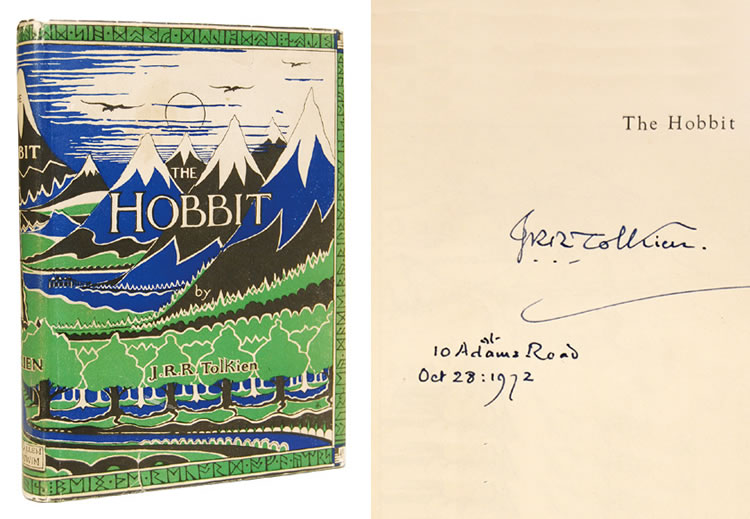
Late Tolkien signature (1972) — examples like this often appear in major literary sales.
The Appeal of Auctions
Auctions bring a level of excitement that is different from fixed-price buying. Watching a rare Tolkien book appear, following the bidding and competing with other collectors can be part of the experience.
At the same time, this environment can lead to emotional decisions. Prices can rise quickly, and it is easy to go beyond what you originally intended to spend.
Successful collectors learn to balance enthusiasm with discipline.
How Auctions Work
Unlike fixed-price listings, auctions follow a structured process. Each item is offered with an estimate range and bidding starts either below or within that range. Bidders compete until the highest bid is accepted when the auction closes.
In addition to the hammer price, buyers must also pay a buyer’s premium. This is typically a percentage added to the final bid and can significantly increase the total cost. Shipping, insurance and taxes may also apply.
Before bidding, it is essential to understand the full cost, not just the price you see on screen.
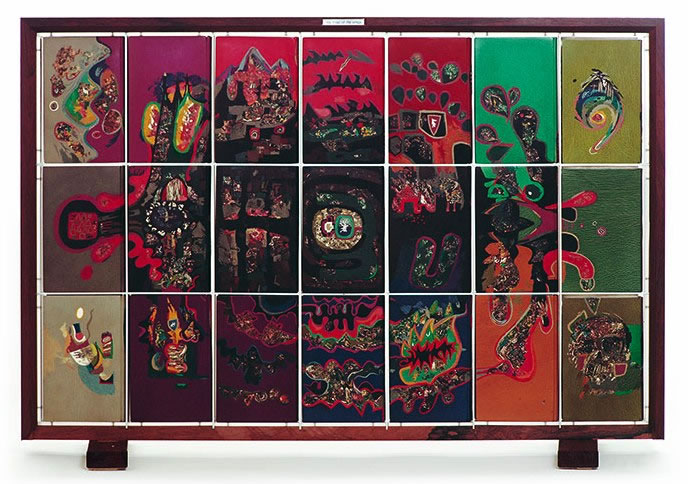
Fine bindings and exhibition pieces — a reminder of the crossover between collecting and book art.
Setting Your Limit Before Bidding
One of the most important rules in auctions is to decide your maximum bid in advance. This should include the buyer’s premium and any additional costs.
It is easy to become caught up in the moment. Competitive bidding can push prices beyond what you originally intended, especially when rare Tolkien books are involved.
Experienced collectors set a limit and try to stick to it. Missing a book is always better than overpaying significantly.
Understanding the Risks
While major auction houses operate at a high professional level, auctions still require careful attention from buyers.
Descriptions, while detailed, should always be read critically. Condition, restoration, completeness and provenance are key factors that can influence value. Photographs are helpful, but they do not always tell the full story.
In some parts of the wider auction market, particularly on less regulated platforms, bidding activity may be less transparent. For this reason, it is generally wise to focus on established houses and to bid based on your own assessment rather than reacting to the behaviour of others.
Research Before You Bid
Before placing a bid, take time to research the book. Compare it with other known copies, check bibliographical details and review past sales where possible.
Using databases, meta search tools and previous auction results can help you understand how a particular edition has performed in the market.
This preparation reduces uncertainty and allows you to bid with confidence.
Inspection and Expert Advice
For high-value Tolkien books, it is often worth going beyond catalogue descriptions. Some auction houses allow in-person viewing before the sale, where books can be examined directly.
For collectors who are unable to attend, it is possible to work with a specialist who can inspect items in advance, verify condition and provide additional insight before bidding. In some cases, experienced dealers can also assist with bidding on behalf of collectors.
This can be particularly valuable for high-end Tolkien material, where small details can have a significant impact on value. You can read more about my work with collectors or get in touch if you are considering a specific lot.
Bidding Strategy
There is no single correct way to bid, but a disciplined approach is essential. Some collectors prefer to bid early to secure a position, while others wait until the final moments.
Whichever approach you take, the most important factor is consistency. Bid according to your own valuation of the book, not in response to other bidders.
In many cases, patience and restraint are more valuable than speed.
Final Thoughts on Auctions
Auctions remain one of the most exciting and important parts of collecting Tolkien books. They offer access to exceptional material and provide insight into real market values.
At the same time, they require preparation, discipline and careful judgement. Collectors who approach auctions with knowledge and patience are best placed to benefit from what they offer.
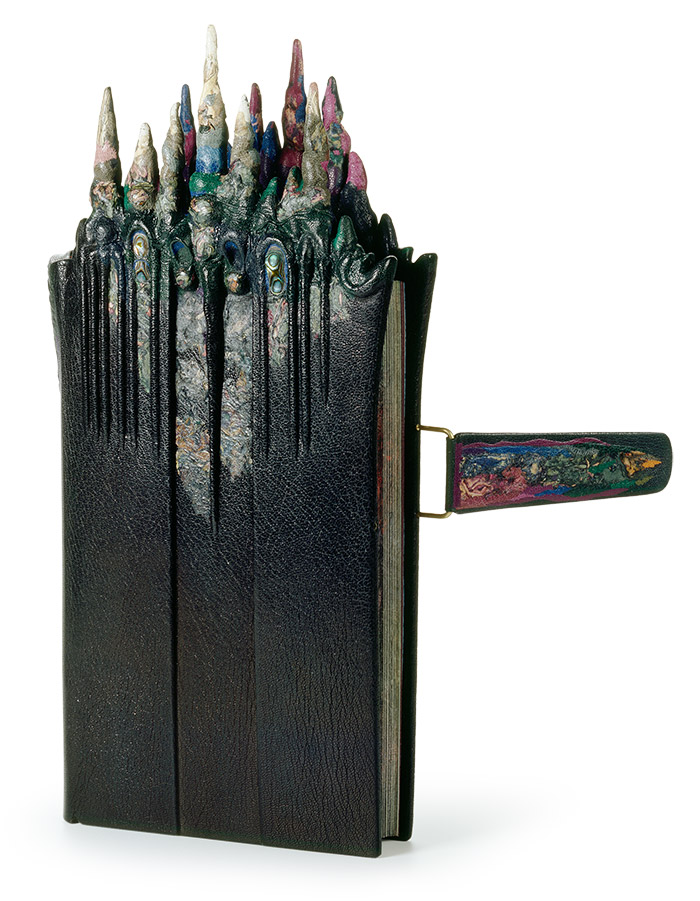
A modern fine binding — demonstrating how Tolkien collecting extends beyond original editions.