The Grading of Tolkien Books: Condition, Value, and How to Assess Them
The condition of a Tolkien book is one of the most important factors in determining its value. Two identical editions can differ dramatically in price depending on their state of preservation.
Understanding how books are graded is therefore essential for any collector—whether you are buying your first copy of The Hobbit or evaluating a rare first edition of The Lord of the Rings.
This guide explains the terminology used by dealers, how grading works in practice, and how small details—condition, dust jackets, provenance, inscriptions, and signatures—can have a major impact on value.
In the rare book market, understanding grading is not just about condition—it is about recognising value.
Why Condition Matters in Tolkien Collecting
In Tolkien collecting, condition can have a greater impact on value than almost any other factor. A first impression of The Hobbit can sell for around €15,000 in battered condition, while a fine copy with a near fine dust jacket may reach €250,000 or more.
With the right dedication or association, that same book can exceed €400,000.
The same applies to The Lord of the Rings. A first edition set in dust jackets may sell for €35,000 or more, while an exceptional, unrestored set in truly outstanding condition can reach €150,000.
These differences come down to details: fading, restoration, handling, jacket quality, inscriptions, provenance, and originality.
In practice, the difference between average and exceptional copies often lies in details that are easy to overlook without experience.
The Importance of Dust Jackets
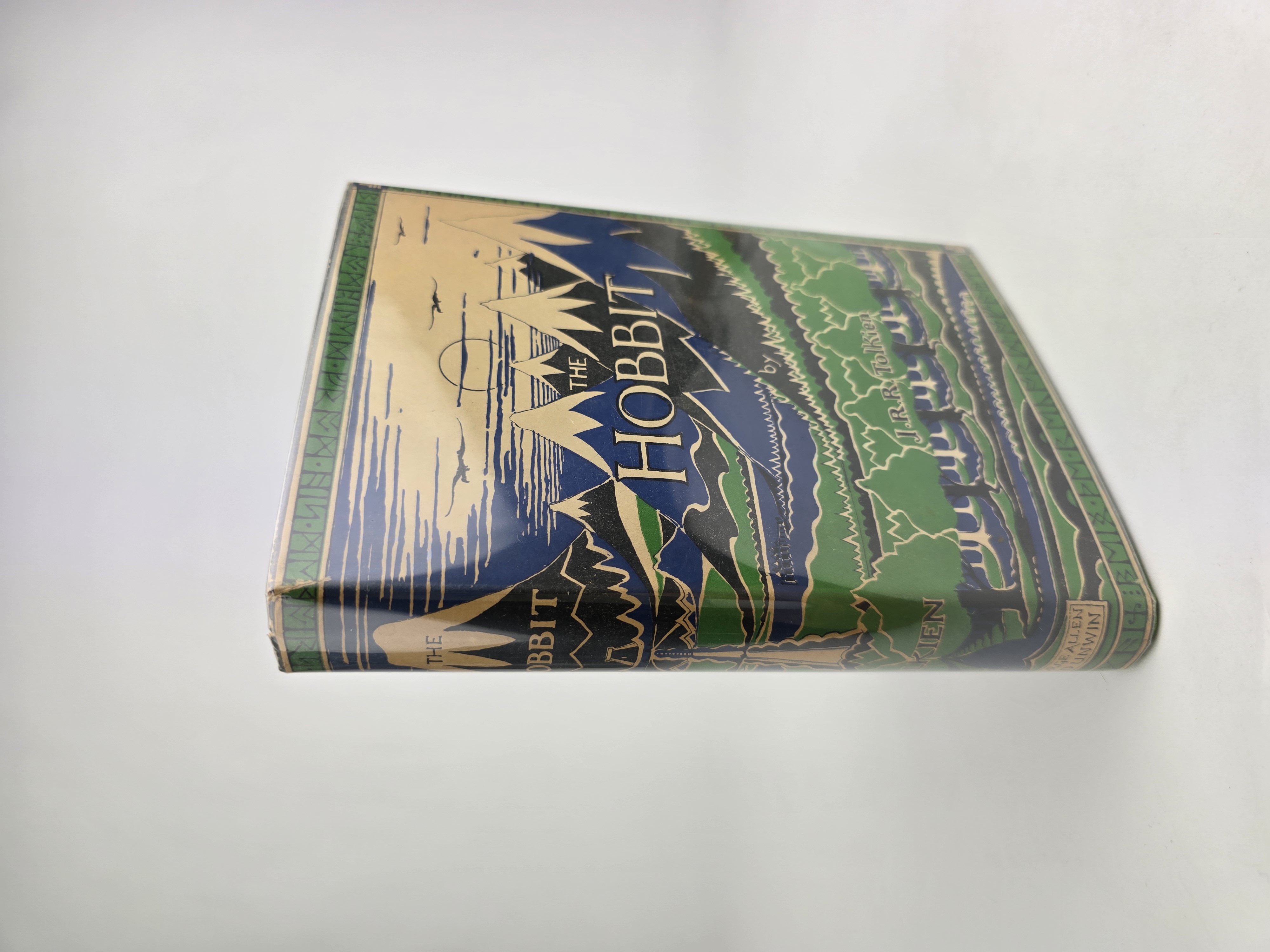
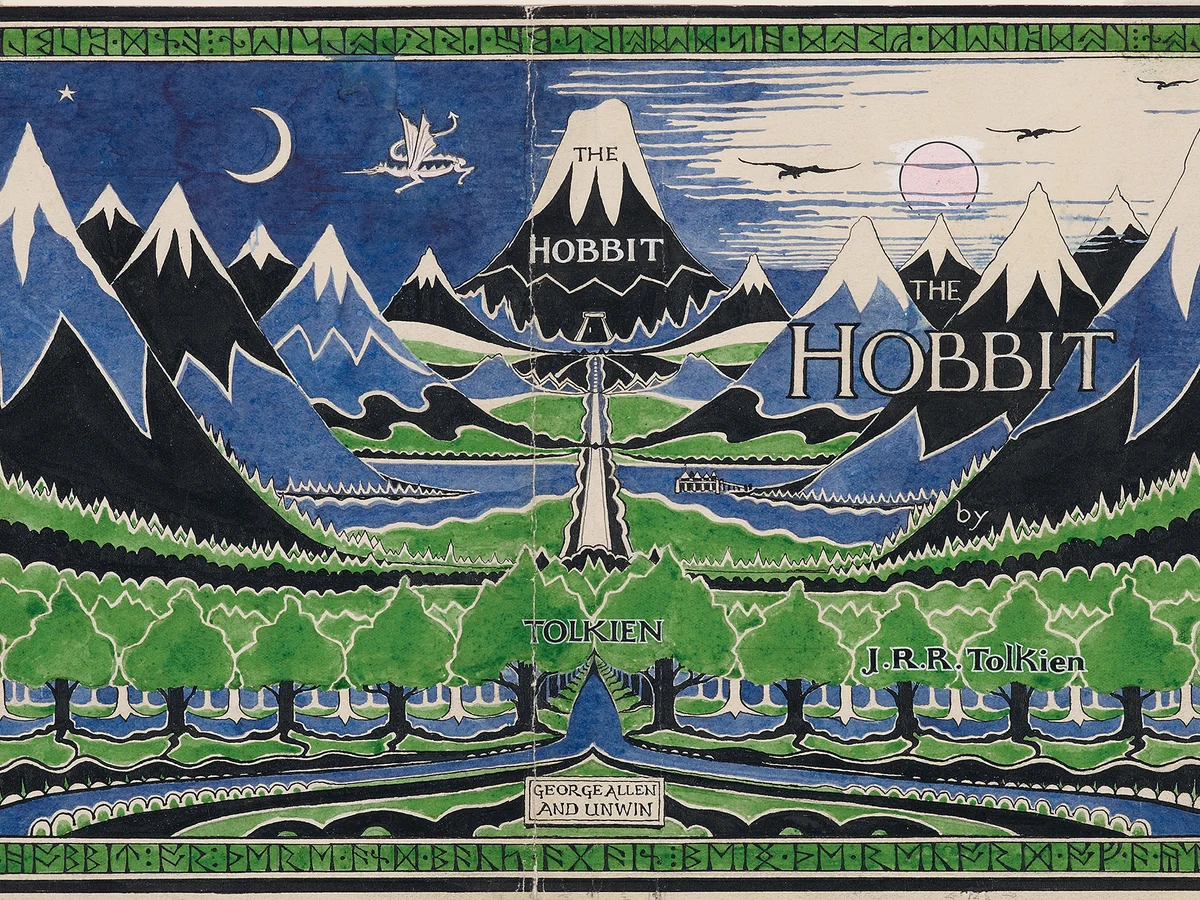
In many Tolkien books, the dust jacket is the most valuable part of the book.
A fine book with a damaged or missing dust jacket can lose a significant portion of its value, while a slightly worn book with a strong, original jacket may be far more desirable.
Collectors should pay particular attention to fading, price clipping, restoration, reinforcement, and colour. Early The Lord of the Rings dust jackets originally had a subtle greyish tone—something often overlooked today, as many copies have aged, faded, or yellowed over time.
Book vs Dust Jacket Grading
Tolkien books are typically graded with separate conditions for the book and the dust jacket, for example: Fine / Very Good.
The first term refers to the condition of the book itself, while the second refers to the dust jacket.
Because the dust jacket plays such a critical role in value, even small differences in its condition can result in large price variations.
Common Defects—and When They Matter
- Price-clipped dust jackets
- Fading or sunning to the spine
- Foxing or spotting to paper and edges
- Restoration, repair, or reinforcement
- Loose or shaken binding
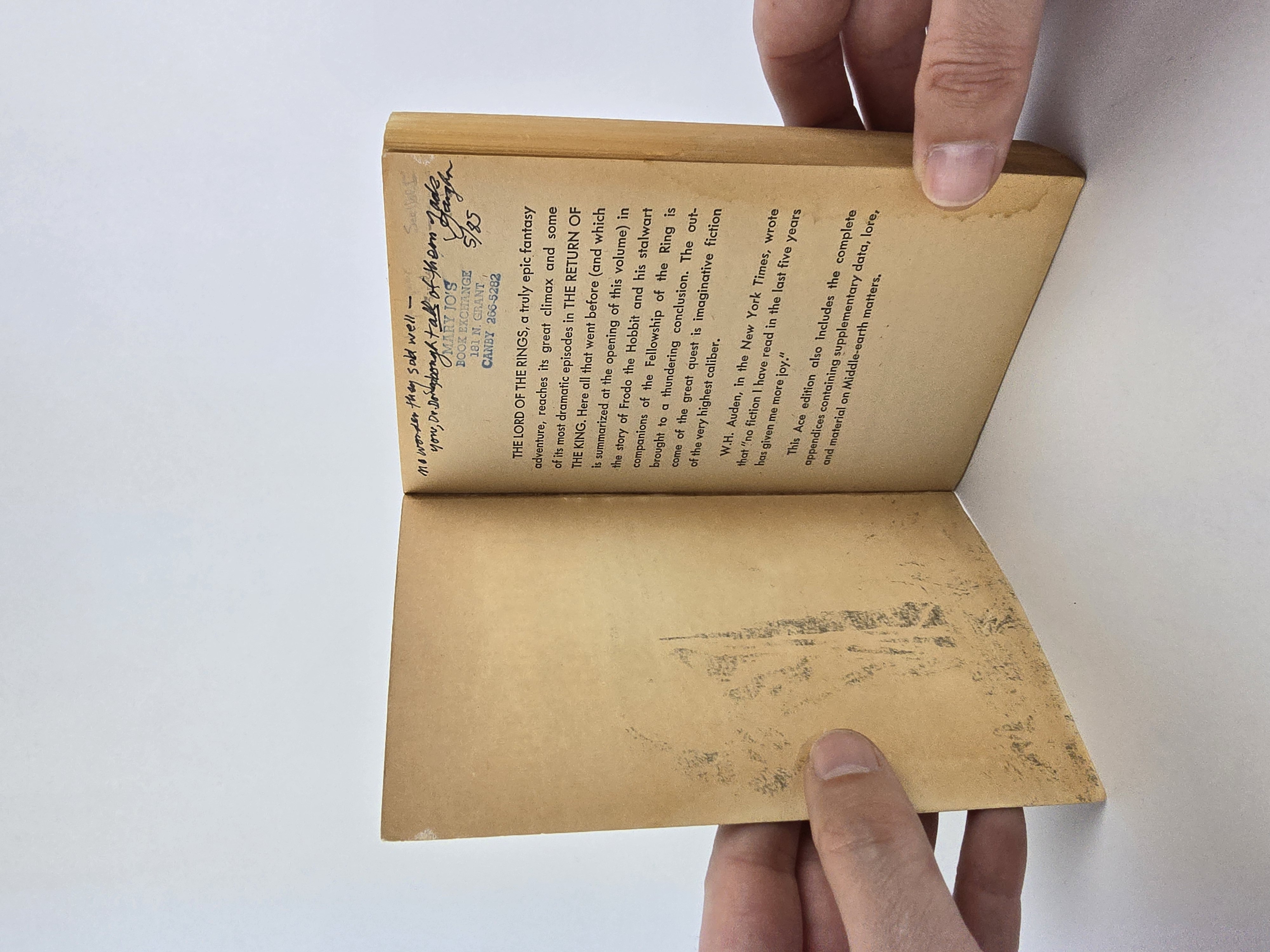
- Inscriptions, annotations, or previous owner markings
- Missing maps, plates, slips, cases, or other original parts
Not all defects are equal. Some reduce value significantly, while others may have little impact—or even add interest.
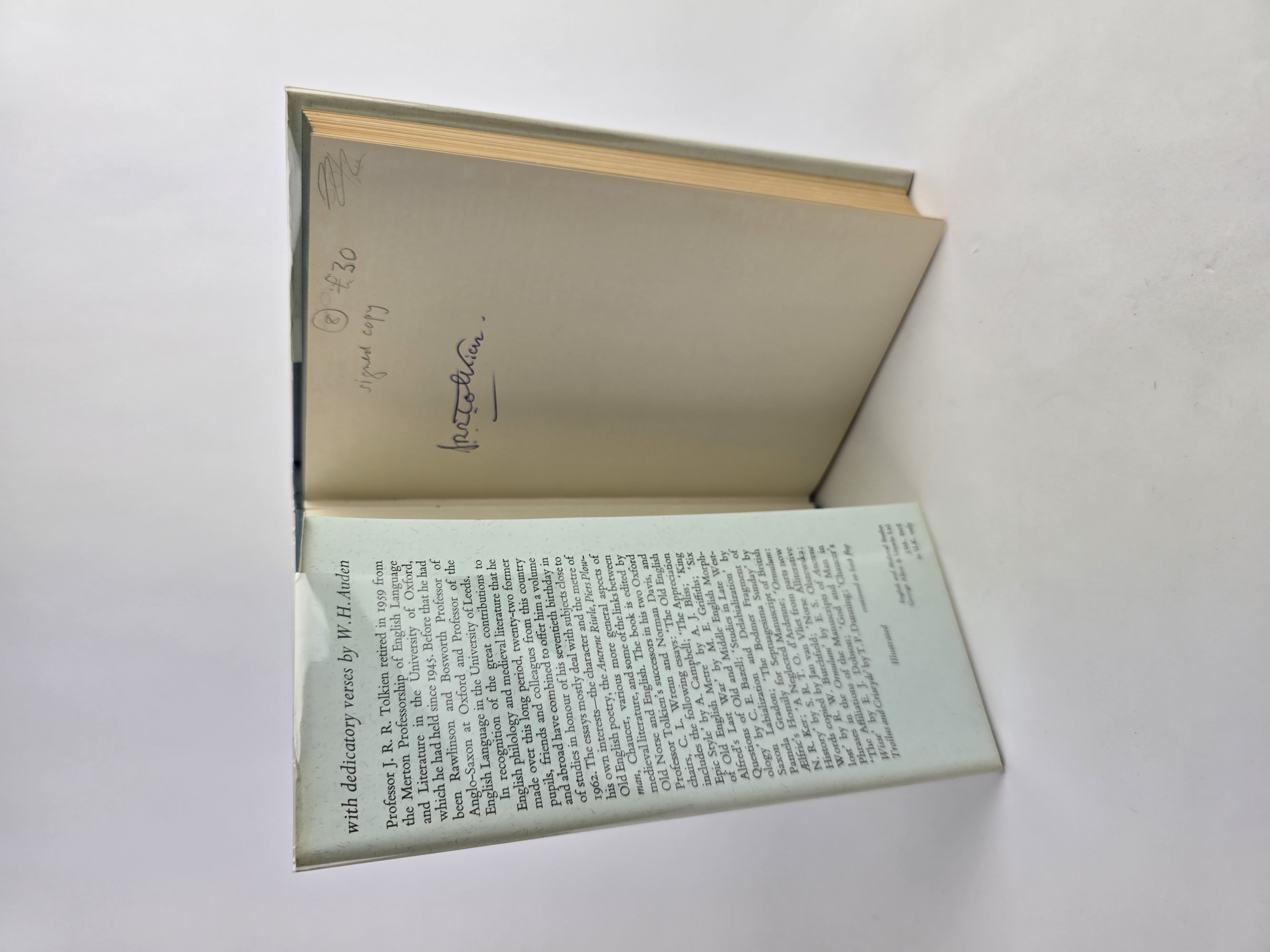
Inscriptions are a perfect example. A generic previous owner name may lower value, but a meaningful inscription, especially one connected to Tolkien, his circle, or a historical context, can transform a “defect” into something of great importance.
Collector’s Insight
There are, broadly speaking, two types of collecting.
On the one hand, there is the pursuit of perfection: books in untouched, near-pristine condition, sometimes still preserved in their original shipping boxes or mailers. This is often the goal for deluxe and limited editions, where condition is everything.
On the other hand, there are books with history—copies that have been read, handled, annotated, inscribed, and passed through different hands. These may not be perfect, but they can carry stories that a pristine copy never could.
Both approaches have their place. A pristine copy can be a museum-quality object, while a worn copy with a story can offer a direct connection to the past.
Buying Tolkien Books with Confidence
When buying Tolkien books, always look beyond the simple grading code. Read the full description carefully and examine photographs in detail.
A book described as “Very Good” by one seller may differ significantly from another seller’s interpretation of the same grade.
The difference between a €50,000 book and a €120,000 book often lies in details that only become visible with experience.
This is where experienced dealers make the difference: recognising how subtle differences in condition, originality, and provenance translate into real market value.
Grading Terminology
First learn the terminology. There are standard terms for the parts of a book, as well as the most common types of damage.
Books and dust jackets are often graded separately, for example: F / VG, meaning a Fine book in a Very Good dust jacket.
A simple letter code is not sufficient. Each defect that results in a grade below Fine should be described clearly.
- As New (AN) — Perfect, unused condition. Extremely rare.
- Fine (F) — No defects. As close to perfect as possible.
- Near Fine (NF) — Minor, almost imperceptible flaws.
- Very Good (VG) — Light wear, small defects, still attractive.
- Good (G) — Solid copy with visible wear, but complete.
- Fair — Heavily worn, but still complete.
- Poor — Severely damaged or incomplete.
- Ex-Library (XLib) — Library copy with markings; this must always be stated.
Common Mistakes in Describing Condition
- Avoid vague phrases such as “good for its age”.
- Do not use “else fine”—a book is either Fine, or it is not.
- Do not rely only on a grading code without describing the actual defects.
- Never copy another seller’s description without verifying the book yourself.
A good description should help the buyer understand exactly what is present, what is missing, and what condition each part of the book is in.
Signatures, Inscriptions, and Association Value
While condition is critical, it is not the only factor that determines value. Signatures, inscriptions, and association can dramatically influence the desirability and price of a Tolkien book.
Two identical copies in the same condition may differ enormously in value depending on how and where they are signed, and to whom they were inscribed.
The placement of the signature matters: title page, half-title, front free endpaper, loose slip, or one volume of a three-volume set. The quality of the signature matters too: clear or rushed, dated or undated, flat signed or dedicated.
At the highest level, the relationship between Tolkien and the recipient can become more important than the book itself.
See our detailed guide on Tolkien signatures and how to identify them.
What Makes an Association Copy Important?
A simple flat signature may be desirable, but a dedicated copy can tell a much deeper story.
A book inscribed to a friend, colleague, publisher, scholar, family member, or notable public figure can carry far greater significance than a standard signed copy.
In exceptional cases, association copies become unique historical objects. The inscription, date, recipient, and provenance all work together to create value.
This is where a previous owner’s name, normally considered a defect, may become the most important feature of the book.
Descriptive Bibliography
While condition is essential, accurate description goes beyond grading. Descriptive bibliography is the study of how books are physically constructed and how their variations can be identified.
This includes details such as printing points, bindings, typography, issue states, dust jackets, maps, inserted material, and later changes between impressions.
Two key reference works are Fredson Bowers’ Principles of Bibliographical Description and Philip Gaskell’s A New Introduction to Bibliography.
For Tolkien collectors, the essential reference is Wayne G. Hammond’s J.R.R. Tolkien: A Descriptive Bibliography.
Studying this work, combined with examining real books in the market, is one of the best ways to develop a strong understanding of Tolkien bibliography.
Learning Through Practice
The best way to learn grading is through experience. Compare books across dealers, auctions, and collections, and study how condition is described and priced.
Look at similar copies and ask why one commands far more than another. Is it the dust jacket? The absence of restoration? The sharpness of the boards? The colour of the spine? The provenance? The inscription?
Over time, patterns emerge, and your ability to assess both condition and value improves significantly.
Grading Tolkien books is both an art and a skill. Terminology provides a framework, but true understanding comes from experience, observation, and careful comparison.
Condition, rarity, completeness, provenance, inscriptions, and association all play a role in determining value. By learning to recognise these factors, collectors can make better decisions and identify exceptional books when they appear.
Frequently Asked Questions
What is the most important factor in Tolkien book value?
Condition and dust jacket quality are the most important factors, followed by rarity and provenance.
Are dust jackets really that important?
Yes. In many cases, the dust jacket is more valuable than the book itself.
Do inscriptions reduce value?
Not always. While generic names may reduce value, important inscriptions can significantly increase it.