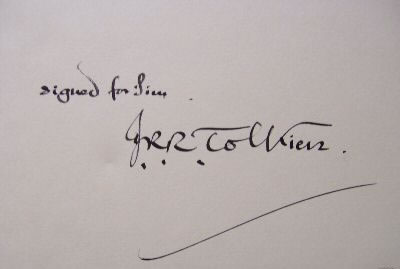
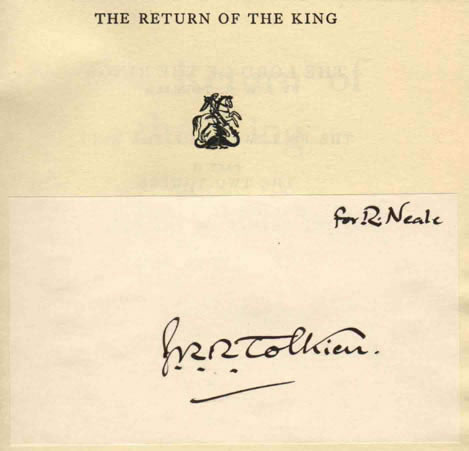
J.R.R. Tolkien Signatures: Authentic Autographs and Fakes

Authentic signatures by J.R.R. Tolkien are among the rarest in modern literary collecting—and also among the most frequently faked.

Because Tolkien rarely signed books and never participated in modern-style book signings, genuine autographs are scarce and highly sought after. At the same time, the market is flooded with facsimiles and convincing forgeries, making this a particularly difficult area for collectors.

This guide explains how to distinguish real Tolkien autographs from printed facsimiles and fake signatures, using real examples from the market.


What Makes Tolkien Signatures So Rare?

Every week I review rare Tolkien books offered across the market, and signed copies are among the most closely watched items. Buying signatures is a perilous business—many examples offered for sale are either facsimiles or outright forgeries.

J.R.R. Tolkien signed relatively few books, most of them for friends, family, or close associates. He did not take part in organised book signings, which means there is no large pool of signed copies in circulation today.

As a result, genuine signed editions—especially of The Hobbit or The Lord of the Rings—command very high prices and are typically handled by established antiquarian dealers and major auction houses.

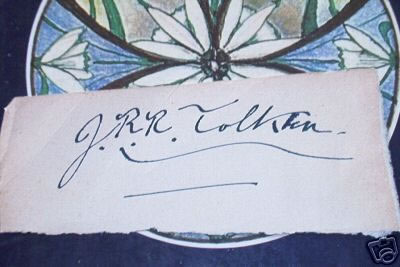
Particular caution should be taken with “cut signatures” (signatures on loose paper), as these are among the most frequently forged items in the Tolkien market.

Anyone considering the purchase of a Tolkien autograph should approach the market with caution.

This article offers a practical guide to Tolkien signatures. The first part covers facsimile signatures, with thanks to “Deagol” from TolkienBooks.net for allowing me to reproduce his images and build further on his original article. The second part looks at buying authentic Tolkien signatures and shows examples of forged signatures found in the market.
Frequently Asked Questions on Tolkien Signatures

How rare are Tolkien signatures?

Extremely rare—most were given privately rather than through public events.

Did Tolkien ever do book signings?

No. Tolkien did not participate in organised book signing events as we know them today.

Are most Tolkien signatures on eBay real?

No—many are facsimiles or outright forgeries.

Can a certificate of authenticity be trusted?

Not always. Provenance and traceable history are far more reliable than certificates alone.


Facsimile Tolkien Signatures (Most Common Mistake)

One of the most common mistakes collectors make is confusing printed facsimile signatures with genuine autographs.

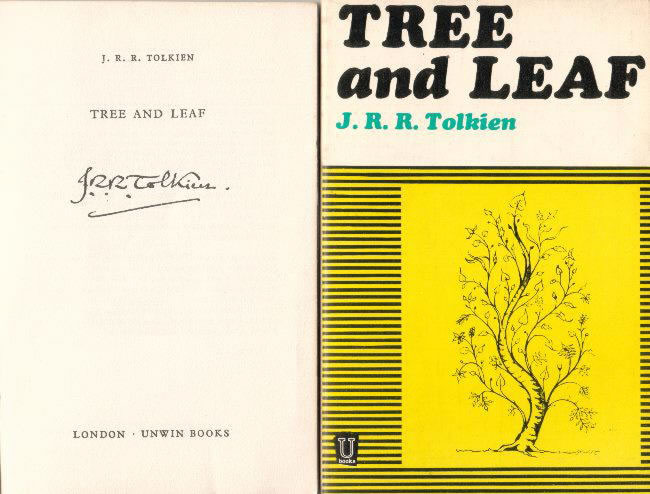
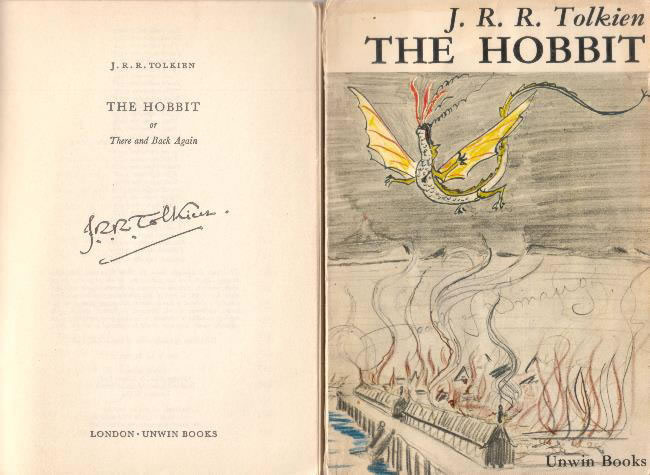
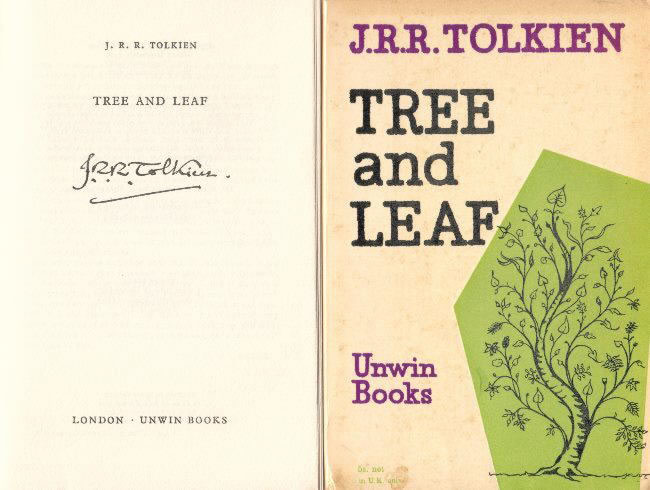
There is hardly a week that passes without questions about “signed” copies of The Hobbit or Tree and Leaf. In most cases, these signatures are printed reproductions that appear identically in every copy of the book.

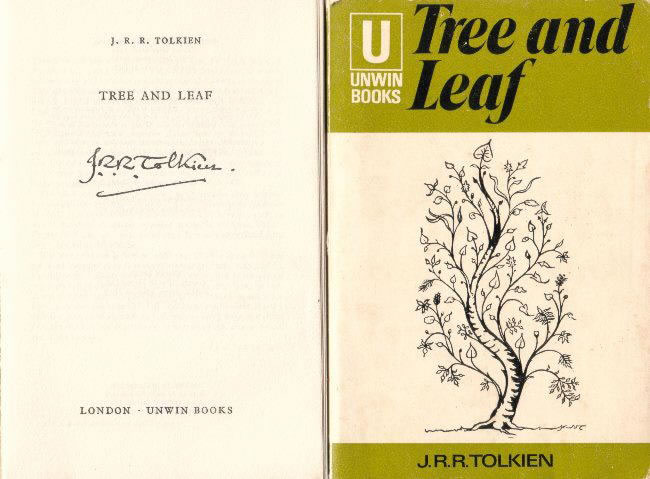
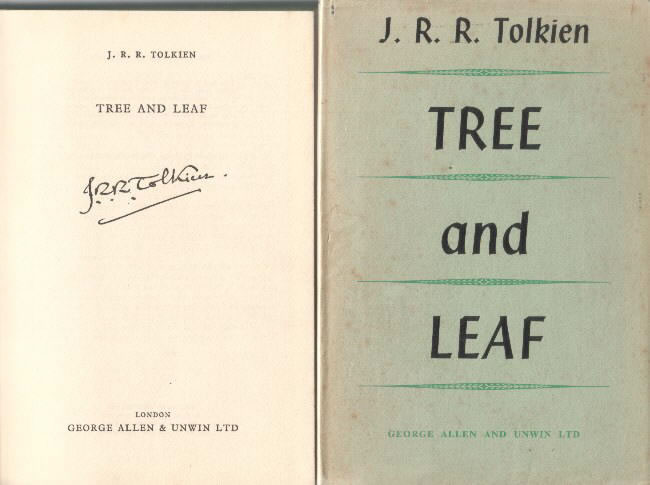
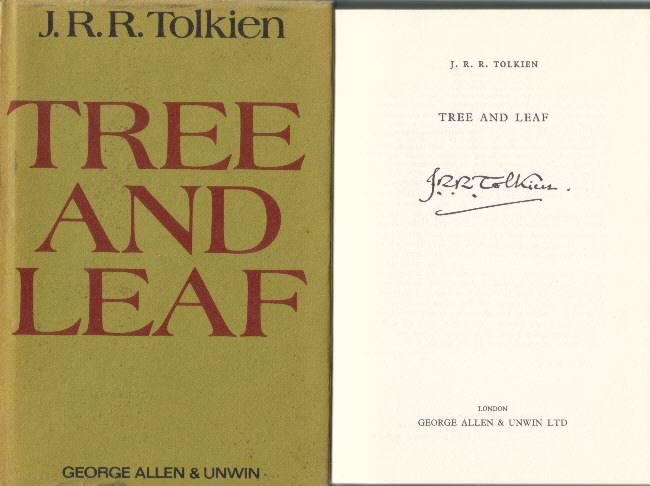
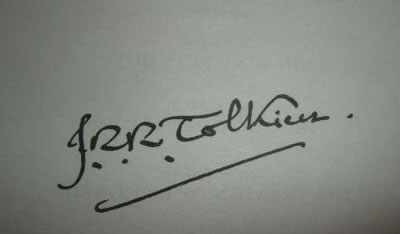
These facsimile signatures are typically found on the title page and may appear straight or slightly slanted depending on the impression—but they are not handwritten.

The most common editions containing facsimile signatures are listed below.

  • The Hobbit, Unwin Books paperback editions (1966–1975)
  • Tree and Leaf, Unwin Books paperback editions (1964–1975)
  • Tree and Leaf, Allen & Unwin hardback editions (1964–1974)

The Hobbit.
Unwin Books. 1966 to 1975. SBN 048230707 (from 1968).
ISBN 0048230707 (from 1971). PB 

Tree and Leaf.
Unwin Books. 1964 and 1966. PB

Tree and Leaf.
Unwin Books. 1968 and 1970. SBN 048240141. PB

Tree and Leaf.
Unwin Books. 1971 to 1975. ISBN 0048240141. PB

Tree and Leaf.
Allen & Unwin. 1964, 1966, 1968 and 1970. HB

Tree and Leaf.
Allen & Unwin. 1971, 1972, 1973 and 1974. ISBN 0048240133. HB

These examples clearly show how identical the printed signatures are across different copies. This uniformity is the key indicator of a facsimile rather than a genuine autograph.

Books That Contain Printed Tolkien Signatures

Facsimile signatures were commonly used in the Unwin Books series (often referred to as “U-books”), introduced in the 1960s. These editions featured a distinctive modern design with white covers, geometric artwork, and a reproduced author signature on the title page.

Both The Hobbit and Tree and Leaf were issued in this format, leading to widespread confusion among collectors.

If you encounter these editions described as signed, it is usually an honest mistake—but they should not be considered genuine autographs.

Additional printed signatures can be found in the following editions:

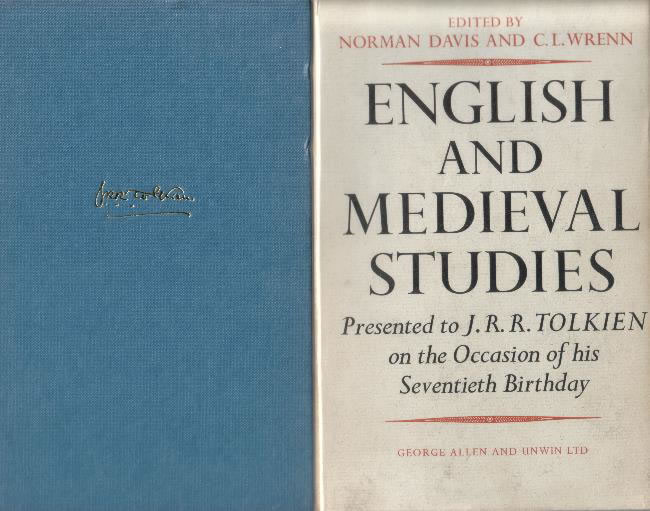
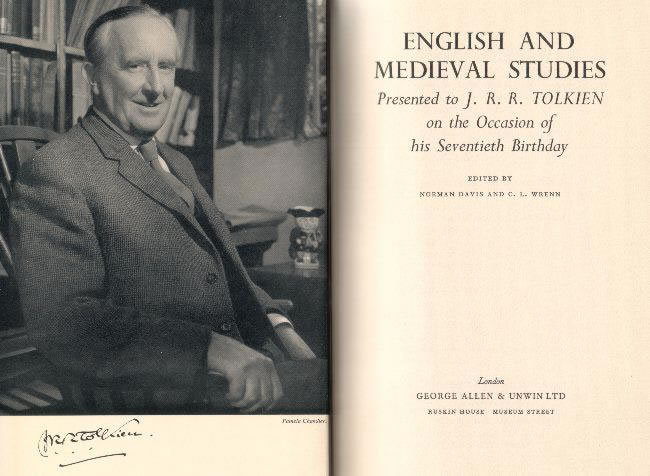
  • English and Medieval Studies Presented to J.R.R. Tolkien (1962)
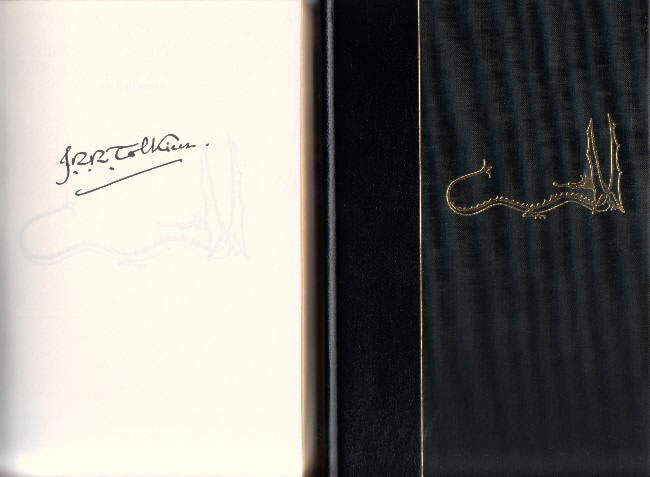
  • The Hobbit Deluxe Edition (1999, HarperCollins)
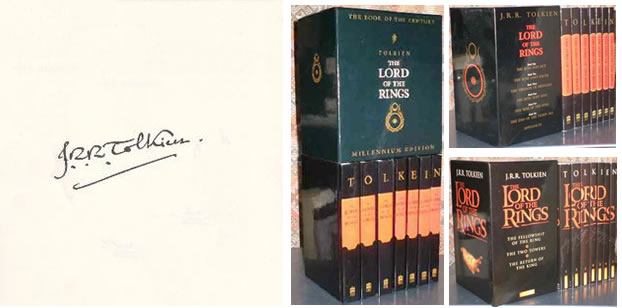
  • The Lord of the Rings seven-volume editions (1999–2001)

English and Medieval Studies.
Allen & Unwin. 1962. HB

The Hobbit. HarperCollins. 1999.
Limited to 2500 copies. ISBN 0261102575. HB

The Lord of the Rings. The Millennium Edition.
1st Seven Volume Edition 1999. HarperCollins.
ISBN 0261103873. HB

The Lord of the Rings. Seven Volume Paperback Edition 1999 and 2000.
HarperCollins. ISBN 0261103938. PB.

The Lord of the Rings. Seven Volume Film Edition 2001.
Collins. ISBN 0007635613. PB

Tips for Buying Authentic Tolkien Autographs

Autograph collecting is a great hobby, but unfortunately, some unscrupulous users on eBay are selling forged or otherwise unauthentic autographs. In the case of Tolkien, more fake than real autographs show up on ebay. By following some simple steps, you can minimize your risk and find some very good deals in the process.

Before You Start Buying

1. Read Description Thoroughly - Make sure that the listing isn't being described as a preprint, reprint, copy, facsimile, secretarial, stamped, or autopen.

2. Do Some Research - Search for known exemplars of signatures to help protect yourself from forgeries or secretarial autographs. Make sure the seller has a close-up of the signature in the auction description. If there isn't a close-up in the auction, ask for one. Always make sure the book could be signed, for example books published after Tolkien's death or signed ACE books are impossible to be real.

3. Look for the Money Back Guarantee - While a Certificate of Authenticity (COA) can be reassuring, they are easily made and many times are not worth the paper they're printed on. Make sure the seller guarantees the authenticity of his/her items and has a return policy. Good COA are nearly never found, only books from known origin really provide certainty, for example when it comes with a letter from Unwin or one of the children or close friends of J.R.R.Tolkien.

4. Know the Seller - Check the seller's feedback and history on eBay. What do others have to say about their merchandise? How long have they been selling on eBay? Some sellers are known Tolkien specialists and their books are normally the real thing. Some auctions keep private ID's of buyers, this is mostly a sign something tricky is going on and there is no way you can warn possible buyers.

5. Ask Questions - Feel free to ask the seller any questions that you may have about the autograph. An honest seller will have nothing to hide and should respond to your inquiry.

Facsimile signature example — A printed signature identical across all copies of the edition.

Forgery on later edition — Impossible to be genuine due to post-1973 publication date.

Forgery on ACE paperback — Unauthorized editions frequently carry fake signatures.

Cut signature — Loose signatures are highly prone to forgery.

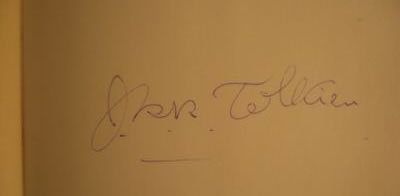
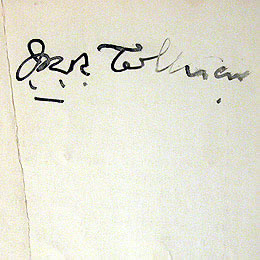
Repeated forged example — A widely circulated fake signature seen across multiple listings.

Authentic signature with provenance — Supported by letter and family association.

Genuine signed copy — Strong provenance and consistent handwriting characteristics.

Collector’s Insight

Having handled thousands of Tolkien books, one pattern is clear: genuine signatures almost always come with strong provenance—letters, inscriptions, or direct family connections.

Loose signatures or “cut pieces” are among the most frequently forged items on the market.

Collecting signed Tolkien books is one of the most rewarding—and challenging—areas of book collecting. With careful research, patience, and a critical eye, it is possible to avoid the many pitfalls and build a meaningful and authentic collection.

Looking for genuine signed material? Browse our books signed by J.R.R. Tolkien or explore our guide to buying Tolkien books safely.