Brian Sibley makes an interesting decision near the beginning of The Fall of Númenor. The Edain reach the island in the year 32 of the Second Age, and the history stops for a while. We are given the shape of the country, something of its wildlife and a sense of how its people lived. A reader who knows how the island will end might be tempted to hurry on to Ar-Pharazôn. I would spend some time here first. It is easier to feel the loss of Númenor once it has been a place where people live.
Sibley uses the Second Age entries in Appendix B of The Lord of the Rings to arrange passages Tolkien wrote at different times and for different purposes. Early on, the island chapters bring together material from Unfinished Tales and The Nature of Middle-earth. Later, the dates make it possible to keep Númenor and Middle-earth in view at the same time. The fleet sent to aid Lindon in 1700 and the beginnings of Númenórean dominion on the coasts around 1800 are close enough on the page to make you think about how the island’s use of its sea power changed.
The arrangement asks more of the reader when it comes to Aldarion and Erendis. Their courtship and marriage are spread across several entries, from Aldarion’s voyages to his accession. The dates show why his voyages matter to the history of the island. The cost of those absences is easier to feel when the story is read together in Unfinished Tales. I would keep that book to hand. It gives Erendis room to speak before the chronology moves on to what her husband and daughter did as rulers.
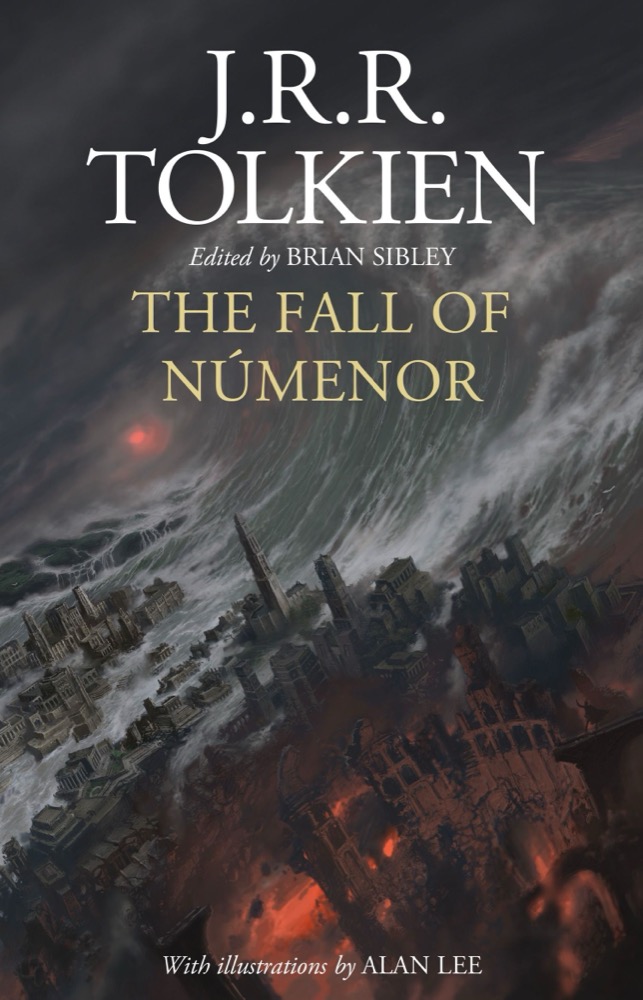
Alan Lee’s jacket puts the catastrophe in front of us before we open the book. The buildings are still visible under the breaking water, and the orange light low in the picture makes the city look inhabited even as it is being lost. Inside, Lee works in watercolour and pencil. I like the difference in scale between the great wave on the jacket and the smaller drawings among the dates and notes. It suits a book in which a royal succession can take a line and a marriage can take pages.
If you know the Second Age chiefly from Elrond’s account or the closing pages of The Silmarillion, this is a good way to follow the years between the forging of the Ring and the Last Alliance. If you already have those books, the reason to add this one is the order in which Sibley lets you read them together. Appendix B of this volume is worth finding too. It gives the Númenórean chapters from The Lost Road their own space, where you can see an earlier form of the story alongside the account you have just read.