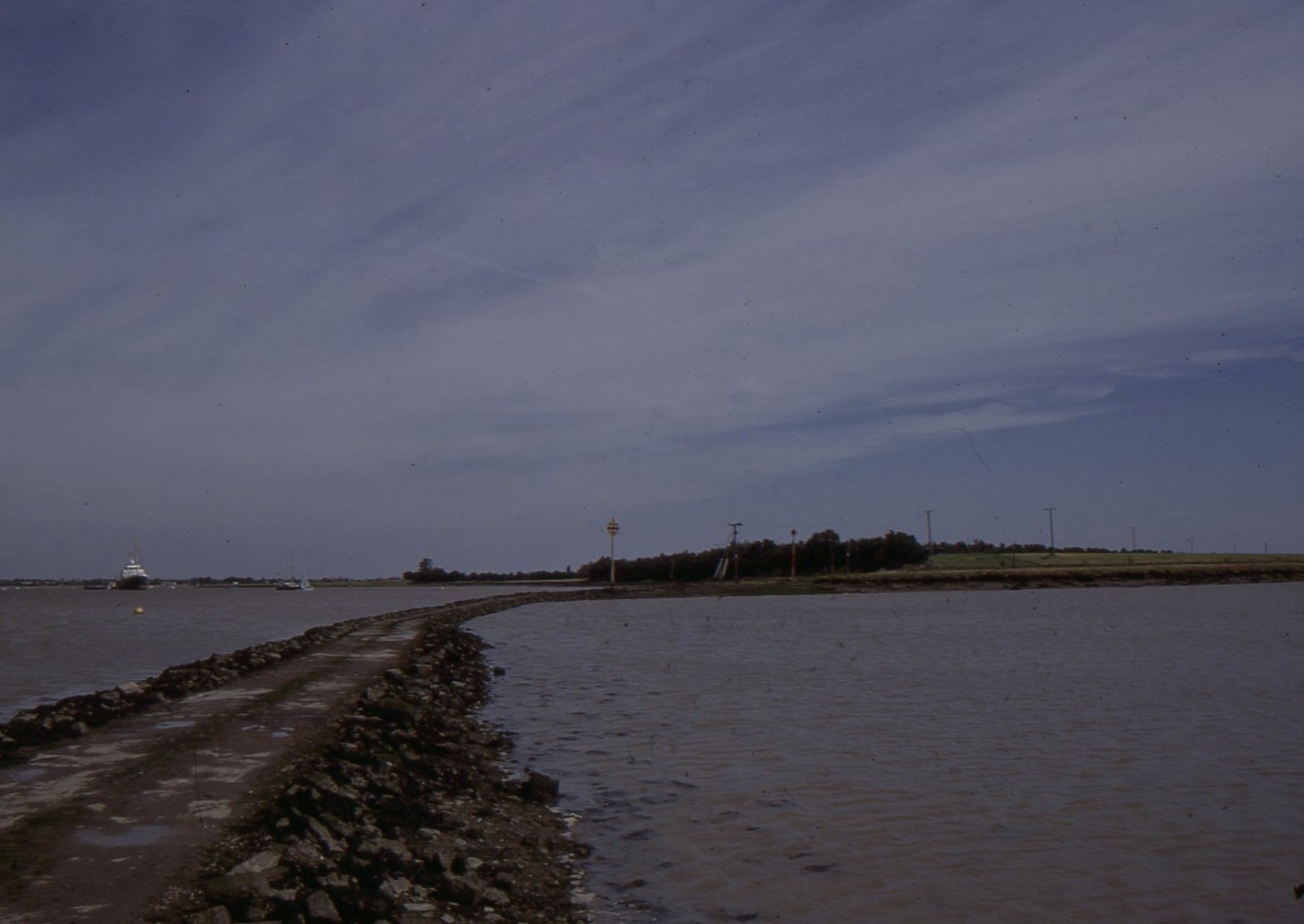
I would start with the crossing. In Tolkien’s prose translation, three men hold the narrow approach across the tidal river. The raiders ask for room to come over, and the English earl gives it to them. At lines 89–90 Tolkien calls the decision “overconfident chivalry.” In “Ofermod,” elsewhere in the same book, he calls it “overmastering pride.” Peter Grybauskas lets us read the two phrases in place. The first helps us see how the appeal might have worked on Beorhtnoth. The second asks what right he had to take the risk on behalf of his men.
The pleasure of reading The Homecoming of Beorhtnoth after the translation is that you know exactly where Tolkien sends his two men. The tide and the crossing are still there, and the fighting is over. Tída has a lantern he can uncover for a moment, and Totta has a head full of old songs. It takes a while for their eyes to tell them who is lying at their feet. Later, riding back with Beorhtnoth’s body, Totta recasts the old retainer’s words about courage in a dream. Then the cart jolts and he feels it in his bones. Read that exchange aloud. Tída’s reply is as easy to hear as a man talking on a bad road, and Tolkien makes it carry the same alliterative measure as the speech that precedes it.
“Ofermod” sends you back to the crossing once more. Tolkien asks us to read the earl’s decision alongside Beorhtwold’s famous words near the end of the surviving poem, at lines 312–13. Beorhtwold is deciding what to do with the strength he has left. The earl, much earlier, is deciding how to spend the lives of men who trust his judgement. There is a reason to keep those two passages open if you come to Maldon from The Lord of the Rings. Grybauskas’s final appendix takes up the distinction. He follows it to the Pelennor Fields, where Merry remembers his vow to Théoden and finds his courage when he sees Éowyn stand her ground. It is a good facing page to Beorhtwold’s speech.
The translation and the play make a good first evening’s reading. The lecture on Old English verse takes more time. Tolkien expects his listeners to attend to the stress on a syllable and to notice how much room a poet has before the first beat of a half-line. I would come back to the lecture after hearing the play. Appendix IV then gives us an early version in rhyme, and Appendix V follows the changes Tolkien made as the dialogue took shape. The drafts are worth having beside the finished play. A reader interested in Tolkien’s verse can hear what happens when he changes his measure. A reader interested in his ideas about courage can see how much those ideas depend on who is speaking.