A Tolkien Collector's Journey
E. Alp Demirkaya — Istanbul, Türkiye
1. Please introduce yourself briefly. Where are you based, and what else would you like readers to know about you?
My name is E. Alp Demirkaya. I live in Istanbul, where I work as a lawyer. Outside my professional life, I have long been deeply interested in J.R.R. Tolkien's works, the world he created, and its place in literary history.
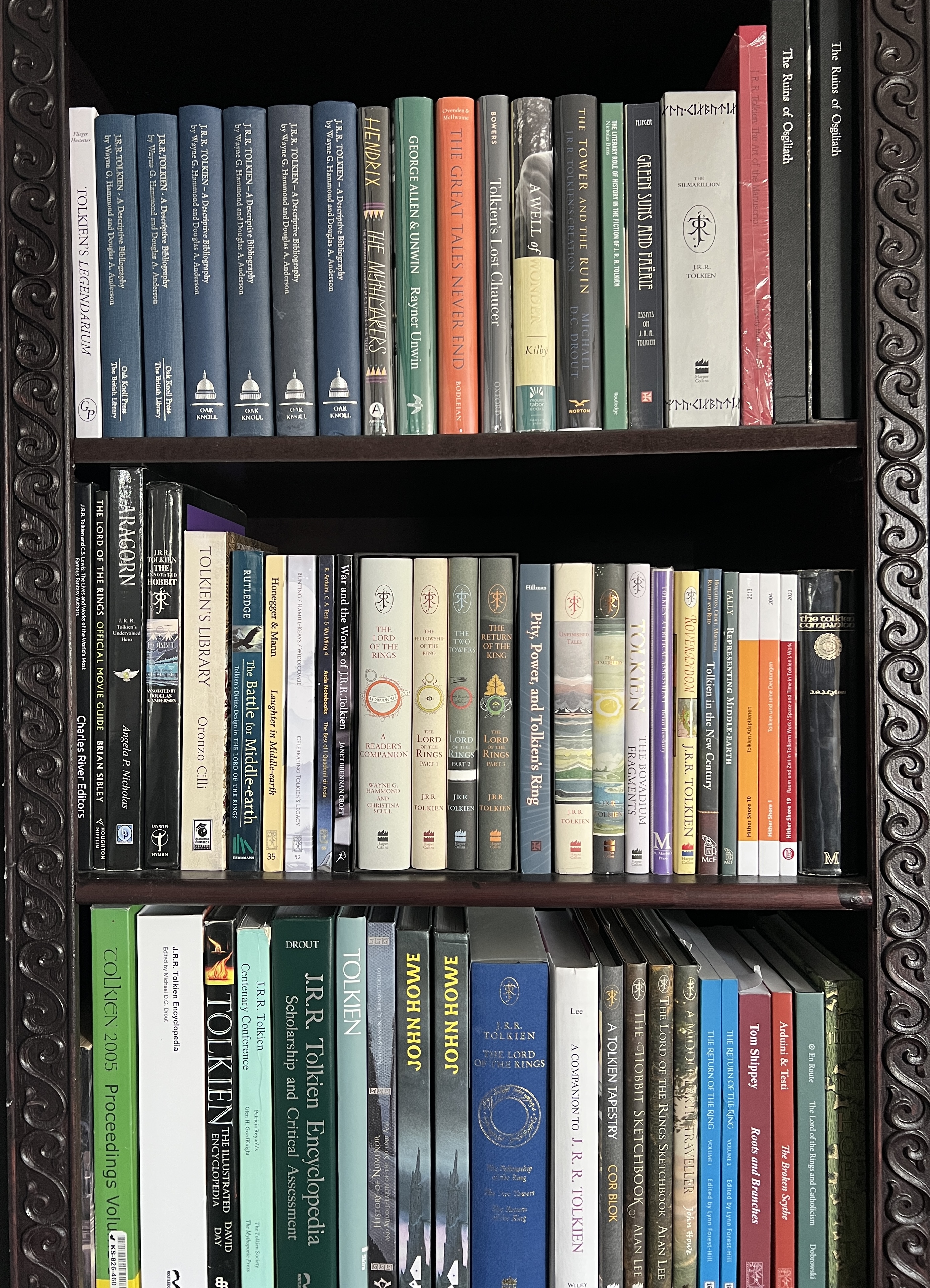
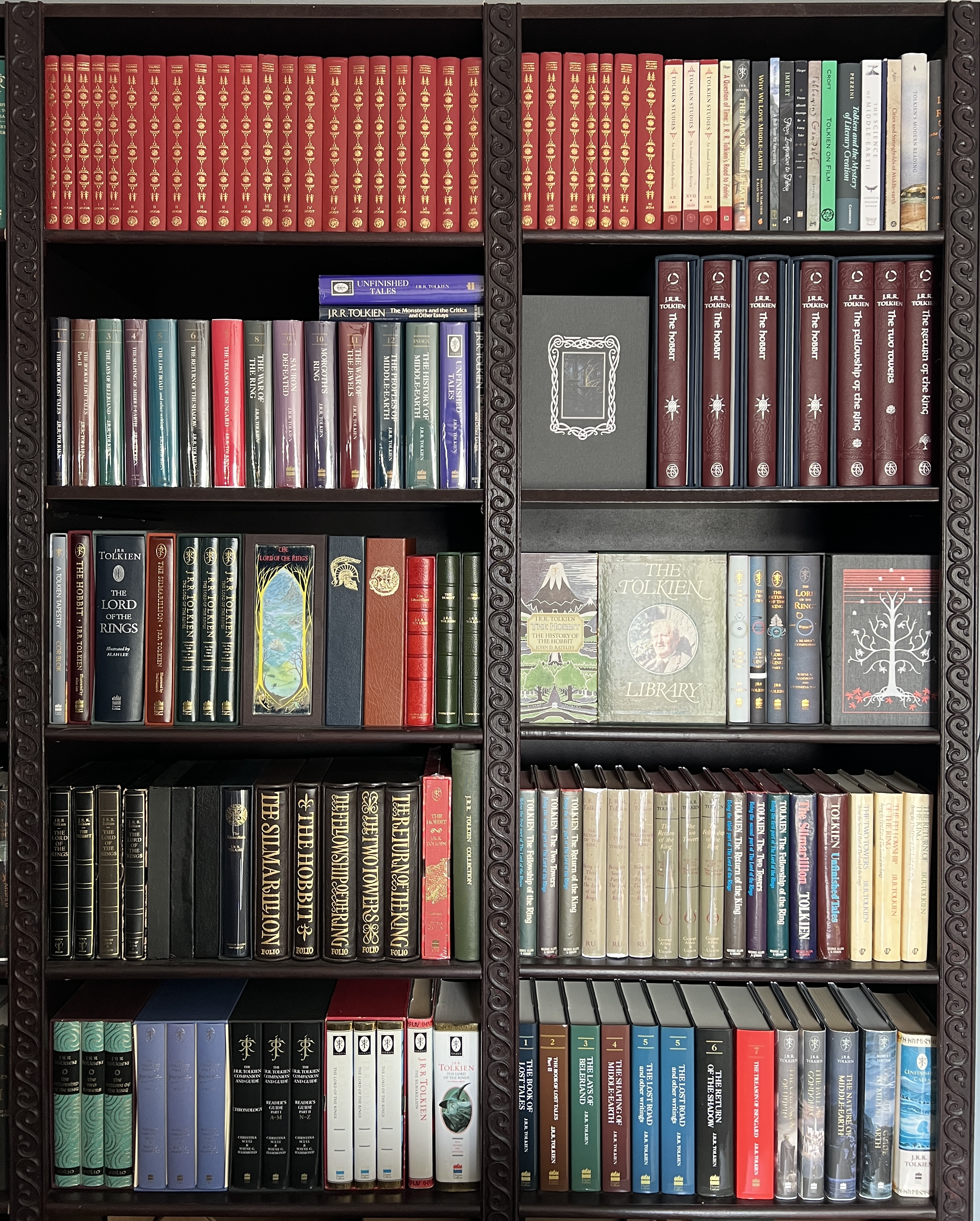
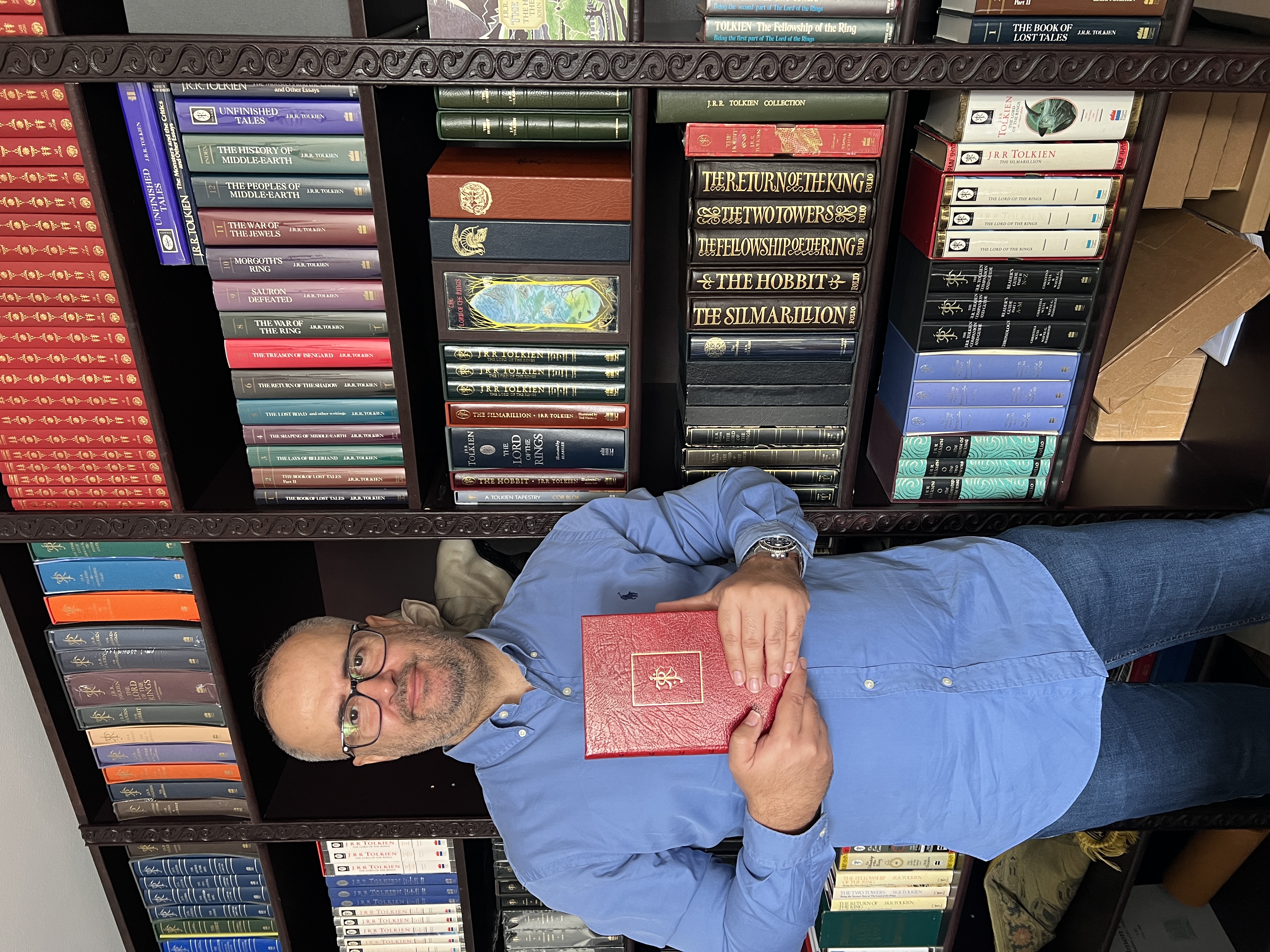
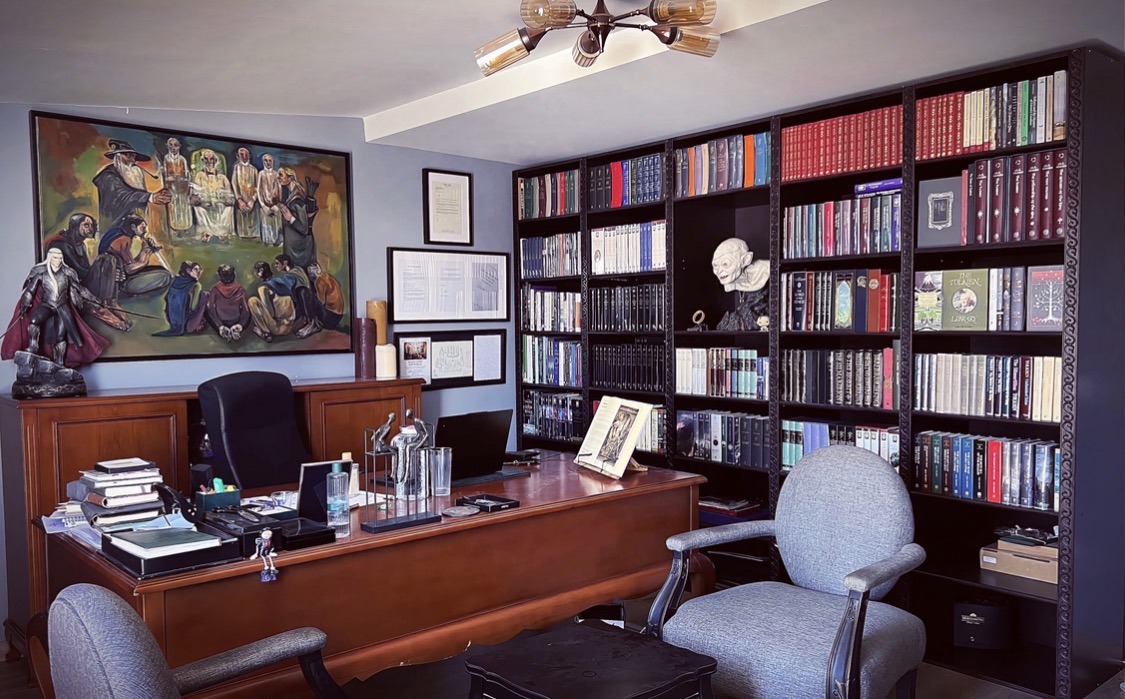
My study, which I have dedicated to Tolkien, is a special place where I can escape the demands of everyday life, spend time among my books, read, research, and lose myself in thought. What this room means to me goes far beyond the monetary value of the books on its shelves.
I dream of establishing a library in Istanbul that could preserve the stories of Middle-earth and the literary legacy behind them. I am still at the beginning of this journey, but I see every book I collect today as a small part of something I hope will one day become a reality.
2. How did you get started in collecting?
When I began collecting, my goal was quite clear: I wanted to acquire first editions of Tolkien's works. The first British editions held particular importance for me.
At first, I thought collecting was simply about finding a book you had been searching for and placing it on your shelf. I would look for a particular book, research it, experience enormous satisfaction when I finally found it, and then begin searching for the next one.
Over time, my collection of first editions developed considerably. I had achieved many of my original goals, apart from the first impressions of the first editions of The Hobbit and The Lord of the Rings.
Curiously, when I reached that point, I began to feel that my collecting journey might be approaching its end. Once you have found the books you have been searching for, what is left?
Then I realised that collecting was about much more than acquiring books.
Discovering the circumstances in which a book was published, the hands through which it had passed, its previous owners, the subtle differences between impressions, and sometimes the story that makes one particular copy different from every other copy became just as exciting as owning the book itself.
That realisation changed the way I approached collecting.
In the beginning, I was searching for books. Today, I am searching for the stories behind them.
3. What do you collect?
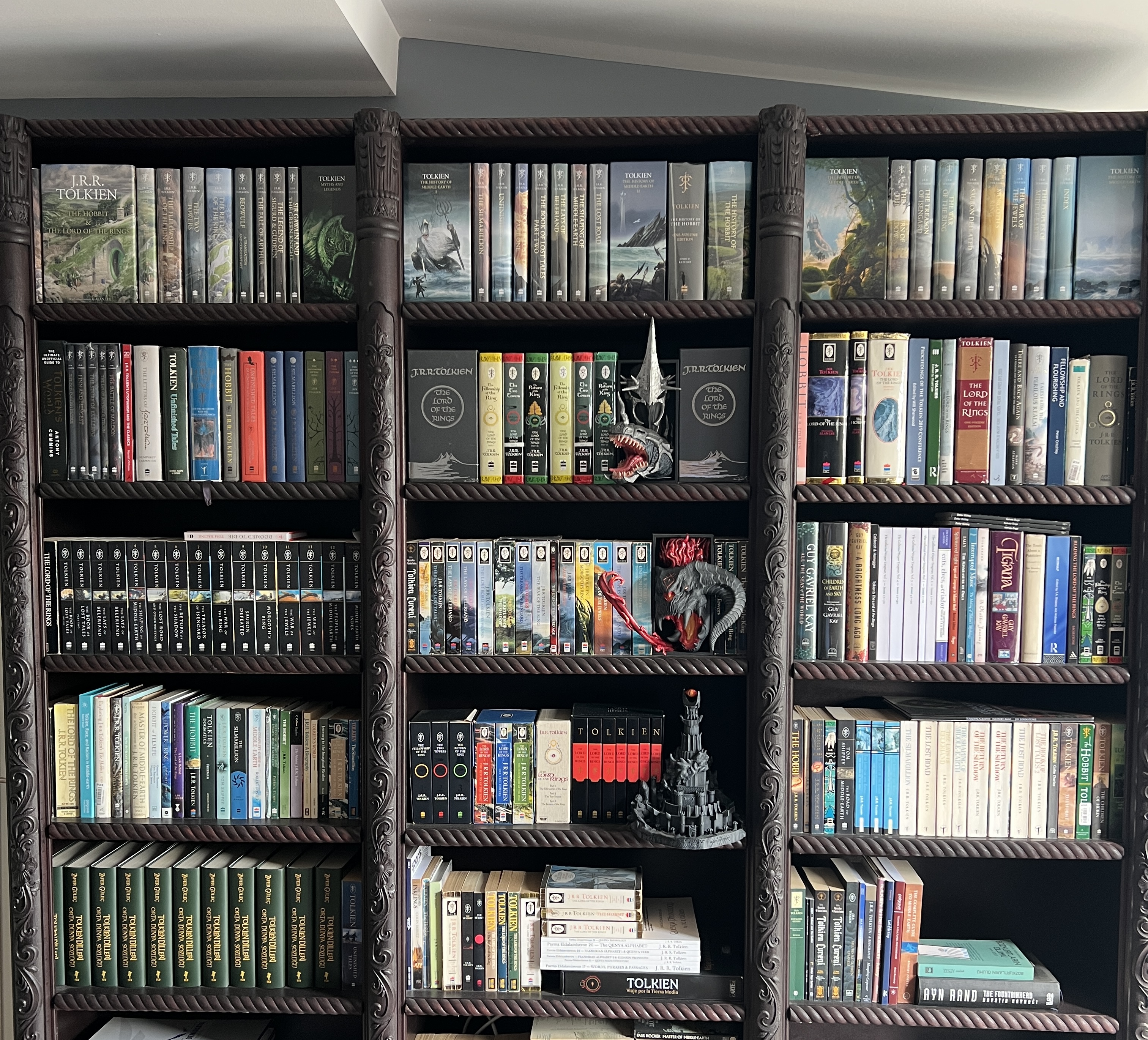
The foundation of my collection consists of J.R.R. Tolkien's works published in the United Kingdom.
From the very beginning, I imposed one limitation on myself: I would not try to collect everything. Tolkien's world is so vast that acquiring every book, linguistic work, letter, illustration, piece of artwork, and other collectible object associated with it would be almost impossible. I therefore decided to concentrate primarily on British editions.
I am particularly interested in first editions, first impressions, limited and numbered editions, deluxe editions, and signed copies published by George Allen & Unwin and HarperCollins.
Books signed by Christopher Tolkien hold a special place in my collection. I consider his contribution to preserving and publishing his father's literary legacy extraordinarily important, and I hope to assemble a more comprehensive collection of books bearing his signature.
As my collection has developed, the differences between various editions of the same work have also become increasingly important to me. I believe that every edition has its own character, expressed through its paper, binding, dust jacket, typography, illustrations, and publishing history.
In short, my aim is not to own as many objects bearing Tolkien's name as possible, but to build a meaningful and coherent collection representing the publishing history of his works.
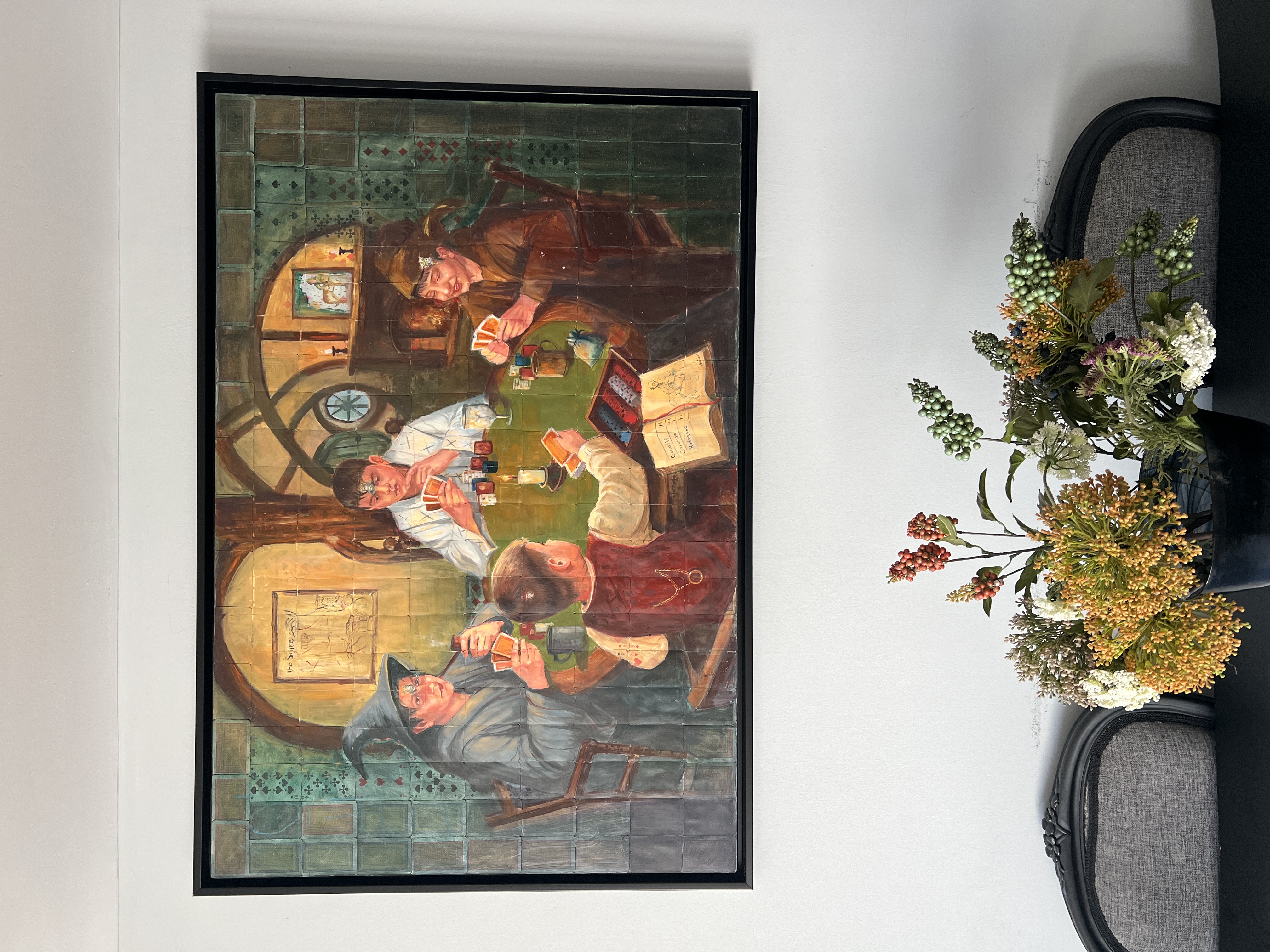
Beyond my books, however, I also have two paintings that I commissioned especially for my Tolkien study. Both have a very different and personal significance for me.
Until now, most of us have experienced the characters and landscapes of Middle-earth largely through the eyes of Peter Jackson, John Howe, Alan Lee, or Ted Nasmith. I certainly do not deny the importance of their artistic contributions. Nevertheless, over time, their interpretations, particularly those of the film adaptations, have become almost the definitive visual identity of Tolkien's world.
I am not entirely comfortable with that. I believe Tolkien's imagination is far too vast to be confined to the interpretations of just a handful of artists.
I wanted to see Middle-earth through other people's eyes. And I did not necessarily want those artists to portray Tolkien's characters in the familiar ways we have come to expect. Quite the opposite: I wanted them to bring their own artistic worlds into Tolkien's.
With this in mind, I commissioned two Turkish painters to create works inspired by Tolkien, while remaining entirely faithful to their own artistic styles.
The first painting is entitled “The Last Hand in the Shire” (Shire'da Son El). It depicts Bilbo Baggins and three of the Istari sitting around a table in the Shire, playing cards. But there is something rather unusual about the scene: all three Istari appear young, almost like children.
In Tolkien's writings, of course, the Istari were sent to Middle-earth in the guise of old men. The difference in the painting comes from the artist's own approach to portraying people. In his artistic world, there are no elderly or even fully grown adults; he always depicts people as children or young individuals. Naturally, he portrayed Gandalf and the other Istari as inhabitants of his own artistic universe.
And that was precisely what excited me.
I did not ask the painter to reproduce Tolkien's characters as we already know them. Instead, I wanted to discover how those characters would take shape within his imagination.
The resulting painting does not depict a scene described in Tolkien's books. Yet it allows me to look at Middle-earth from a perspective I had never encountered before. That, to me, is its true value.
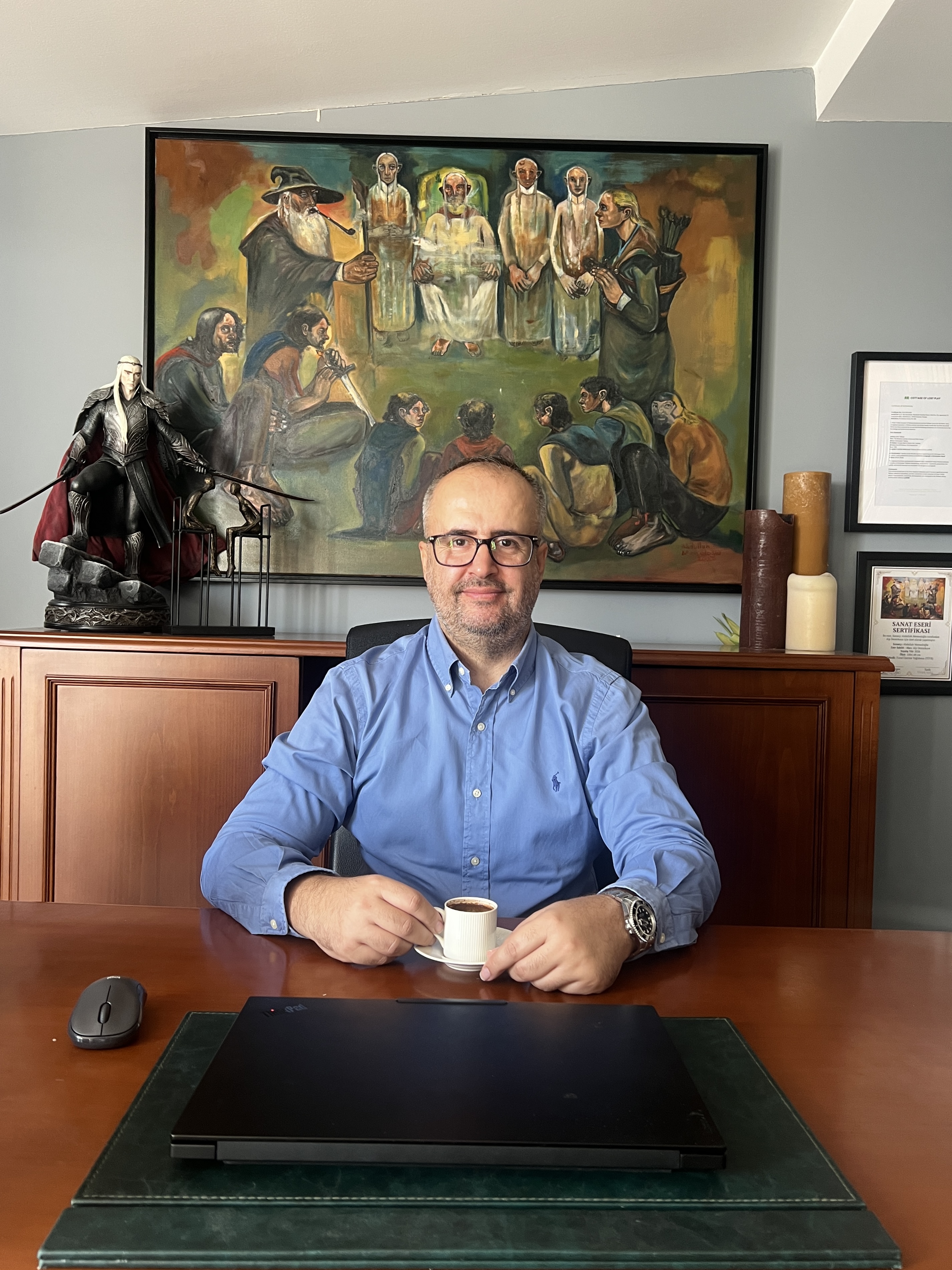
The second painting is entitled “The Council of Elrond” (Elrond Divanı).
The artist's work bears the unmistakable influence of the rural life from which he comes. His figures are often weary, exhausted, and stooped, with unusually large hands and feet shaped by a lifetime of physical labour. Their bodies seem to carry the marks of hard living, constant work, and physical effort.
I felt that this artistic approach could establish a fascinating connection with Tolkien's world.
After all, Middle-earth is not merely a place of magnificent kings, wizards, and Elves. It is also a world of people who work, build, walk, carry burdens, fight, grow tired, and somehow continue despite everything. Physical labour, endurance, and sacrifice are deeply embedded in Tolkien's narratives.
In this painting, the characters lose much of the elegance, perfection, and grandeur with which we are accustomed to seeing them portrayed. Instead, they appear almost like people who have travelled great distances, worked with their hands, and carried the weight of life upon their shoulders.
Through this interpretation, the Council of Elrond becomes more than a grand assembly gathered to determine the fate of Middle-earth. It becomes a profoundly human gathering of weary individuals united by a common purpose.
These two paintings emerge from very different artistic visions. One belongs to a world of childhood and youth; the other to a world shaped by labour, exhaustion, and the burdens of life. What they share is a willingness to reinterpret Tolkien's world beyond the familiar visual conventions.
Perhaps I can summarise my reason for commissioning them in a single thought:
Tolkien left us an extraordinary world. But I do not believe that only a handful of artists should determine how we imagine it.
For me, the value of these paintings lies not in changing Tolkien's world, but in demonstrating how that world can come alive again through the imaginations of others.
If my book collection is an attempt to preserve the publishing history of Tolkien's works, these two paintings remind me of the limitless possibilities his creation offers to the imagination.
4. How big is your collection?
Rather than defining my collection by an exact number of books, I prefer to think about how it has developed over time.
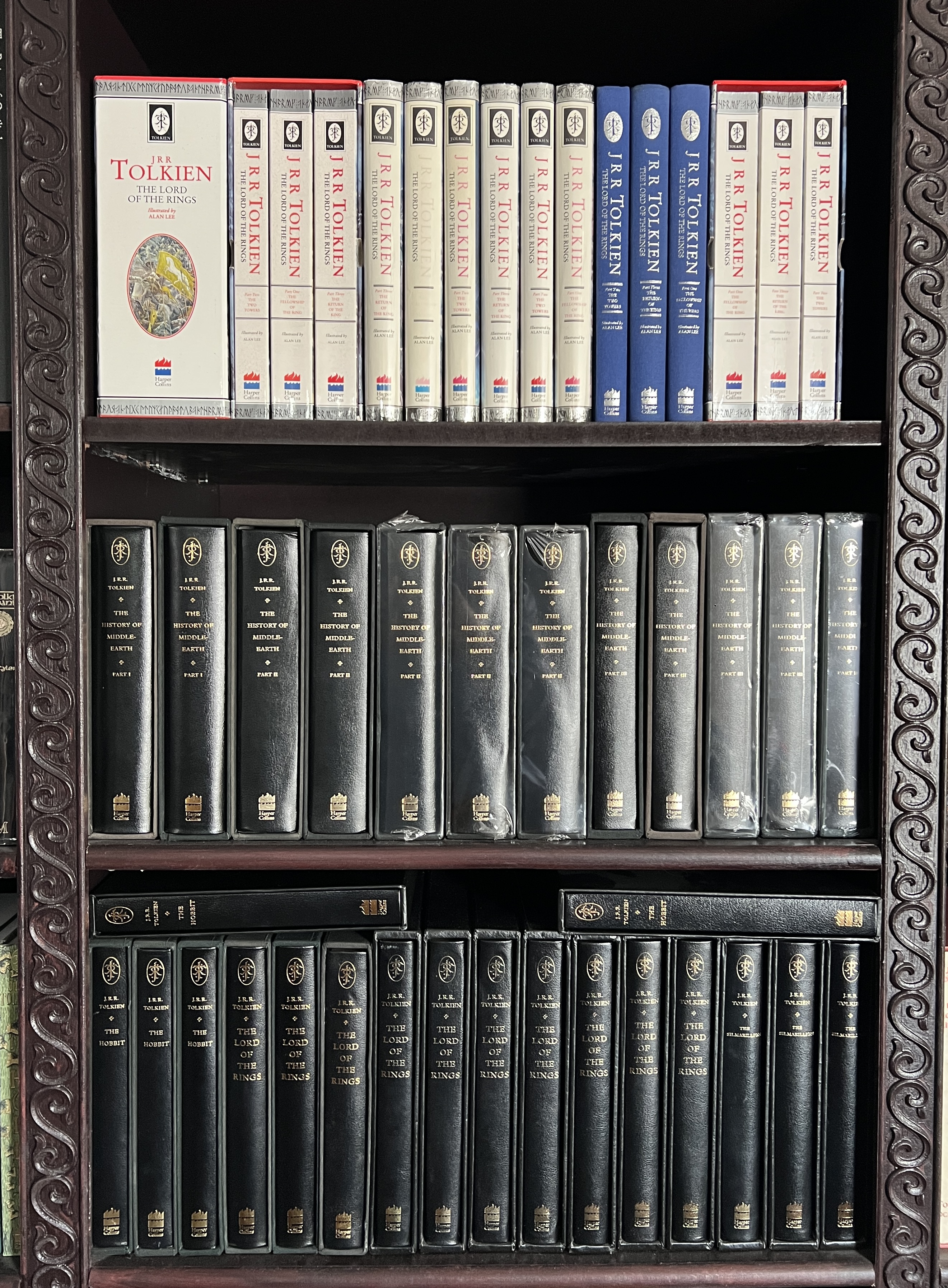
Today, my library contains a substantial selection of British editions of Tolkien's works, including editions of The Hobbit and The Lord of the Rings, a complete set of The History of Middle-earth, and various limited, numbered, and special editions.
However, the size of a collection has never been a measure of success in itself for me.
A library containing hundreds of books can certainly be impressive. But sometimes the history behind a single copy can tell us more than an entire shelf of books.
For this reason, I am now more interested in deepening my collection than simply expanding it. Rather than owning more books, I want to bring together the right books, for the right reasons.
5. What has been your greatest find so far?
It is not easy for me to answer this question with a single book. Some books are important because of their rarity, while others matter because of the particular period they represent within my collection.
The 1982 Super Deluxe edition of The Silmarillion is much more than a rare and special edition to me. It represents an important chapter in the publishing history of Tolkien's literary legacy.
The Silmarillion itself holds a special place in my collection because it is a work that reached readers through the extraordinary dedication and efforts of Christopher Tolkien following his father's death.
Acquiring this remarkable 1982 edition was a source of enormous happiness for me. Yet I do not consider its story complete.
I still do not own a copy signed by Christopher Tolkien. I would very much like to add one to my collection someday. Collecting books signed by Christopher Tolkien is currently one of my main priorities.
Perhaps that is one of the most wonderful things about collecting: when you finally acquire a book you have desired for so long, you discover that its story has not ended. Instead, it invites you to begin another search.
For me, the 1982 Silmarillion is exactly that kind of book.
I also greatly value the first deluxe edition of The Lord of the Rings, published in 1963 with a design by Pauline Baynes. Similarly, the 1969 India Paper deluxe edition represents a distinctive period in Tolkien publishing.
Another special book in my collection is copy number 230 of the 1992 illustrated edition of The Lord of the Rings, featuring Alan Lee's artwork, signed and numbered in a limitation of just 250 copies.
Bringing together all twelve volumes of The History of Middle-earth in first editions and first impressions also means a great deal to me. These books allow us to see not merely the final form of Tolkien's world, but the extraordinary process through which it came into being.
Nevertheless, I believe my greatest discovery is still waiting for me.
A first edition, first impression of The Hobbit from 1937, and first editions, first impressions of The Lord of the Rings, remain among my most important collecting ambitions.
But even if I acquire these books one day, I no longer believe they will mark the end of my collecting journey.
Because there is something I have learned over the years: for a collector, finding a book is sometimes only the first page of a much longer story.
6. Do you have a website? Where do you share your collection?
I primarily share my collection through my Instagram account, @alp.lock.
My intention is not simply to display the books I own. I also try to share the differences between editions, their publishing histories, bibliographical details, and the things I learn about Tolkien's world along the way.
One of the most wonderful aspects of collecting is the opportunity to meet people from different parts of the world who share the same enthusiasm.
Sometimes a photograph, a small bibliographical detail, or even an unexpected exchange of messages can become the beginning of a new friendship.
In the longer term, I hope to develop a more ambitious publishing and library project, one that focuses not merely on photographs of books but also on their stories and the research surrounding them.
7. What does collecting mean to you?
My answer to this question has changed considerably over time.
In the beginning, collecting meant acquiring the most important editions of the works I loved. Later, it became the excitement of pursuing rare books.
Today, however, I see collecting quite differently.
When we buy a book, we tend to think that we own it. But when it comes to old and rare books, we eventually realise that our ownership is only temporary.
There were people who owned these books before us. They read them, kept them, protected them, and somehow ensured their survival until today. We can only hope that others will do the same after we are gone.
This idea means a great deal to me.
I do not consider myself the absolute owner of my books, but rather a temporary custodian in their long journey through time.
Collecting has also brought some wonderful friendships into my life.
Meeting Pieter Collier and the friendship that has developed between us is one of the finest examples. His knowledge, experience, and approach to books have played an important role in changing the way I think about collecting.
Another friend who holds a special place in this journey is Tom W. Ayling. For years, he has been one of my greatest supporters in England. Whether it has been safely looking after my books or helping them find their way to me, he has never hesitated to offer his assistance.
But what Tom means to me goes far beyond this practical help. The trust and friendship that have developed between us over time are among the most precious things collecting has given me.
Looking back today, I can say with complete confidence that Tolkien has brought me not only beautiful books, but also wonderful friends in different parts of the world. And sometimes I think these friendships are worth even more than the rarest books on my shelves.
Over time, this journey has inspired me to dream of something much greater.
I would like to establish a library in Istanbul dedicated to preserving and studying Tolkien's literary legacy, a place that could bring collectors, researchers, and readers together.
In my mind, I have given this dream a name: Rhûn.
In Tolkien's world, Rhûn refers to the distant and often little-known lands of the East. For me, it represents the possibility that a great literary legacy born in the West might one day find a new home in the East.
Of course, I know that bringing such a dream to life will not be easy. It will require time, effort, knowledge, friendship, and resources. Nor do I wish to rush it. My first aim is to build a strong collection and develop a meaningful cultural and intellectual foundation around it.
Perhaps, many years from now, my books will leave the room in which they currently reside and find their places on the shelves of a library accessible to a much wider audience.
Perhaps one day, a young Tolkien reader whom I have never met will take one of those books from a shelf and discover the story behind it.
Even the possibility of that gives an entirely different meaning to what I am doing today.
Because, for me, the ultimate purpose of collecting is not to possess books, but to ensure that their stories continue to live long after we are gone.