Engines in Oxford
Oxford is close to the surface in The Bovadium Fragments. Tolkien gave the city a new name and set it loose among its own motor engines. Put his story next to a postwar road plan and the streets he knew begin to show through the Latin.
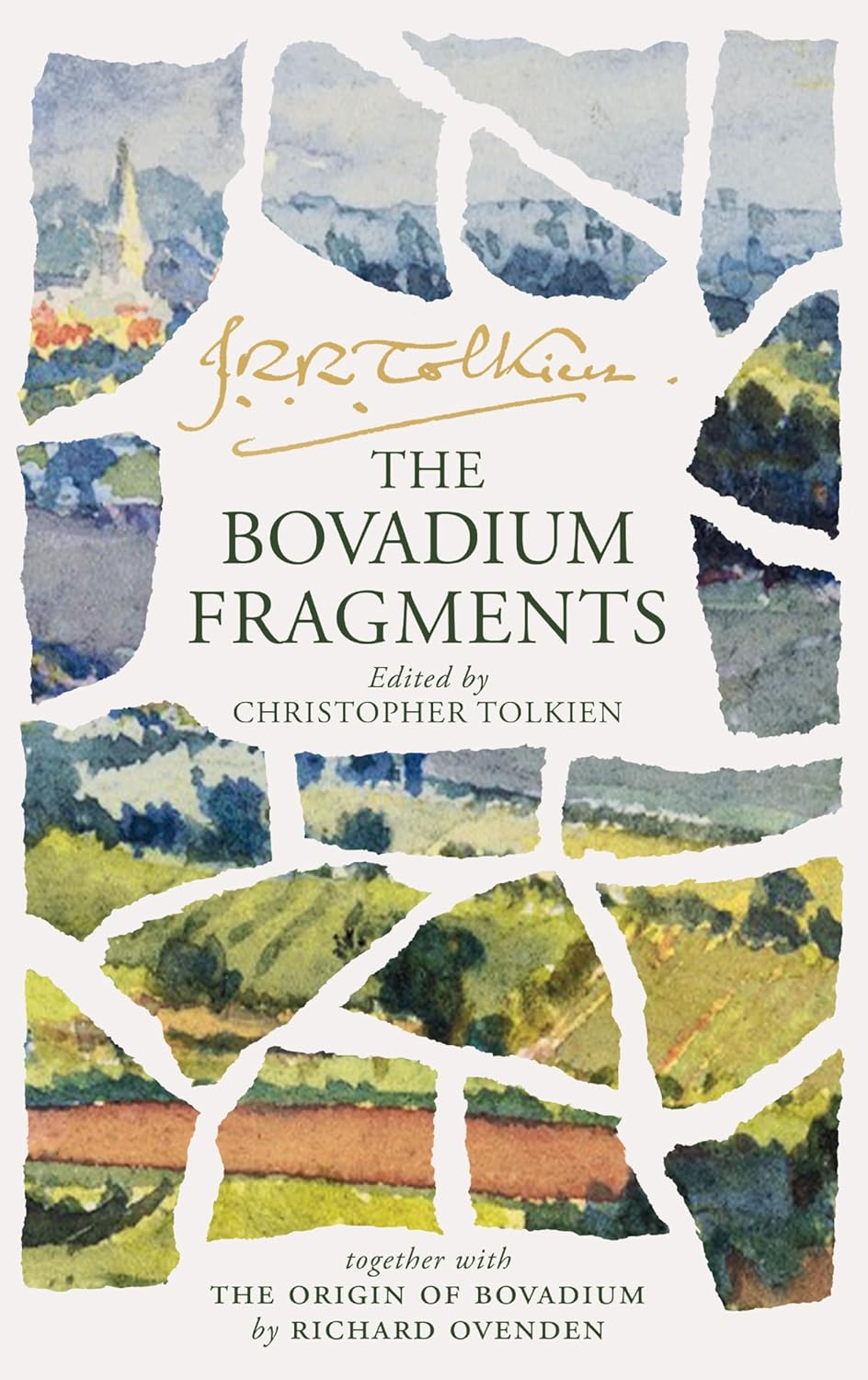
The 2025 edition, edited by Christopher Tolkien and published with an essay by Richard Ovenden, sent me back to Carfax, an old joke about a motor bus, and the mill the hobbits find when they come home.
Start at Carfax, where four roads meet. A person walking into town and a driver trying to get across Oxford both had to make their way through the same narrow centre. Then look at the proposal to take a relief road through Christ Church Meadow and ask where the traffic would have gone.
That is the Oxford I want beside me when I open Bovadium. The drawings and the mock Latin are funny enough on their own. The plan makes it easier to see what Tolkien wanted to hold on to and why the joke has a bite.
Reading Tolkien’s The Bovadium Fragments beside the streets that inspired it
Oxford, 1950s: The City of Engines
To understand Bovadium, we need to step back into Tolkien’s Oxford. By the mid-1950s, the medieval university town was under siege from the modern age. The Morris Motors plant in nearby Cowley had transformed the area into a hub of car production. Roads widened, housing expanded, and the quiet lanes Tolkien once walked were filling with noise and exhaust.
Oxford had to decide how much of the old city it was willing to give up to traffic. The possibility of a relief road across Christ Church Meadow made that question unusually concrete. Richard Ovenden returns to the city and its arguments in the essay that accompanies the book.1
One of the places to start is Thomas Sharp’s Oxford Replanned of 1948. Sharp treated Oxford’s existing buildings and views as things worth preserving. His proposed Merton Mall was a road south of the centre, through Christ Church Meadow along Broad Walk. Both intentions were in the same plan. A road could take traffic away from one old street and send it through a place where people had been accustomed to walk. Whether the change looked like preservation depended on where you stood.2
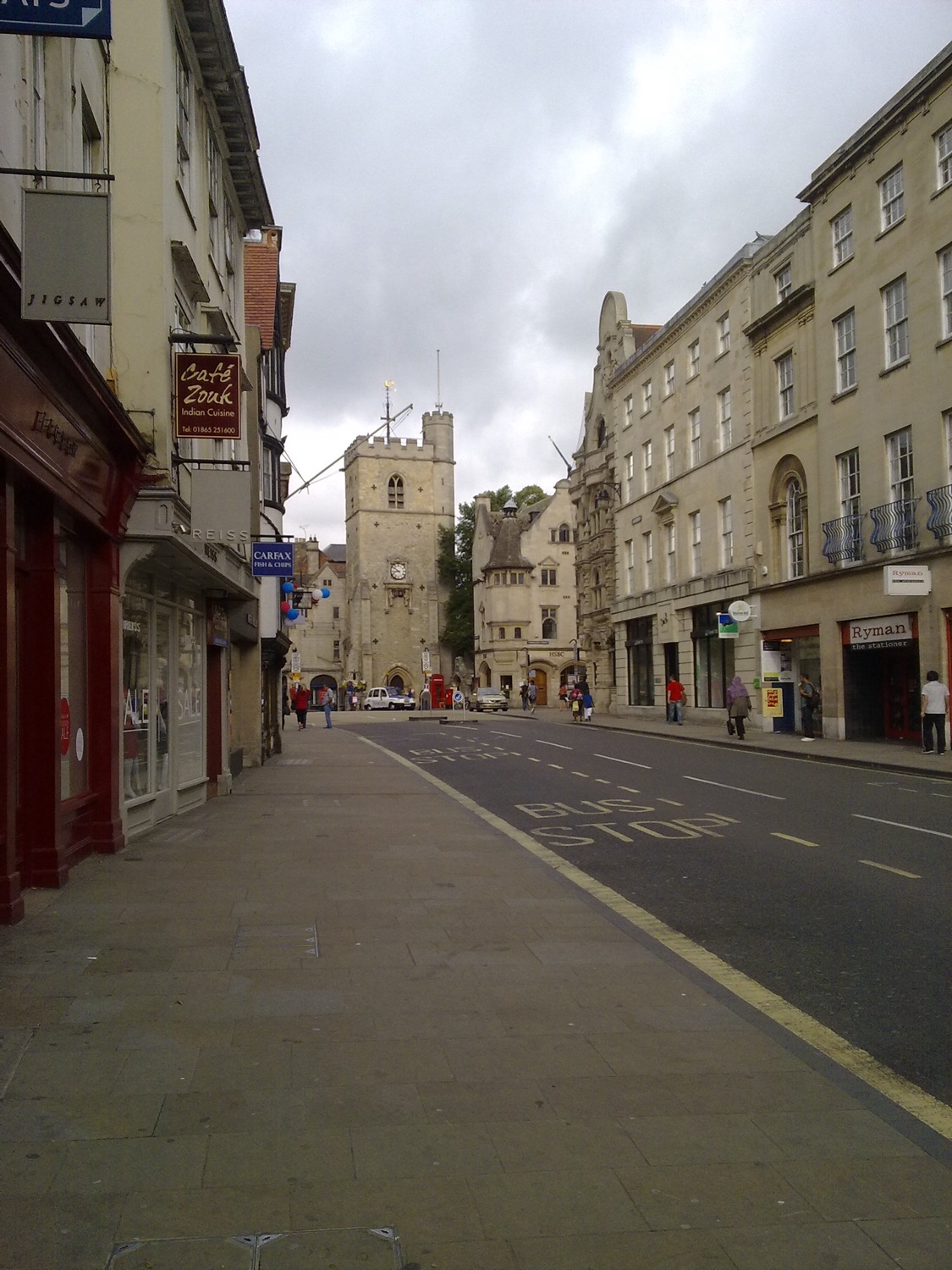
Look at Carfax on a map. Four streets come together in a very small space, with the High Street running east. Traffic from outside the city used the same crossroads as people who needed to get from one part of Oxford to another. A photograph dated 5 April 1961 in a Brasenose College report shows the traffic gathered around Carfax and Cornmarket. The church tower in the newer photograph below gives you a point from which to compare the two.3
The Bovadium Fragments grew directly from that frustration. The title’s mock-Latin disguises little: “Bovadium” stands for Oxford, “Vaccipratum” for Cowley. In the text, Tolkien turns his scholar’s wit on the city that inspired him, portraying it as a civilisation obsessed with “Motores,” engines that never rest. What begins as gentle satire becomes a lament for a culture addicted to its own noise.
This is not the first time Tolkien wrote against industrialisation — The Scouring of the Shire offers a mythic version of the same protest — but Bovadium is different. It is local, concrete, even petty. It captures a moment in history when modernity entered Tolkien’s daily life not as theory but as traffic.
Declining a motor bus
In 1914, the Oxford classicist A. D. Godley put the words “motor bus” through the Latin declensions. A word that might have arrived on the side of a vehicle ended up sounding like something learnt for a class. Hammond and Scull record that Tolkien was sent an illustrated printing of Godley’s poem in April 1957. There is a particular pleasure in knowing he had it among his papers. The joke gives us one Oxford example of a language teacher using the grammar he knew to make sense of a new noise in the street.4
Tolkien turns that joke towards the city itself. Call Oxford Bovadium and its own name begins to show through in pieces. Call Cowley Vaccipratum and the cow and the field reappear behind a place associated with car production. The old place names are part of the argument. They carry the memory of a city that had fords, fields and routes on foot long before there were vehicles to plan for. Tolkien’s invention makes the reader do a little of the work of recovering that older geography.
Why It Stayed Unpublished
Clyde S. Kilby saw the work in 1966 and advised against publication. He questioned how readers would respond to a story that asked them to follow Latin and to share Tolkien’s dislike of the motor car. Rayner Unwin read it that August and suggested the Oxford Magazine. Tolkien himself had asked about the editor of Time and Tide in 1960, with a satire in mind that was probably Bovadium. It is easy to read the gap between composition and publication as a decision made once and for all. There were at least two possible homes for the story, and the two men who read it in 1966 came away with different advice.5
Christopher Tolkien edited the story. The 2025 edition brings his work together with his father’s illustrations and Richard Ovenden’s account of its origins.6 It is worth opening the book at the beginning and noticing who did what before going on to the satire.
The English hardback appeared in October 2025. It gave us another way to read Tolkien’s Oxford, alongside the letters and the stories where a machine can change the character of a place.
Tolkien thought the story had grown elaborate. In the note Christopher quotes, Tolkien names the older poem and a revival of the debate about the roads as its starting points. He also mentions two of the things that had crept in, the habits of archaeologists and the appearance of college crockery. That is a good reason to pay attention to the way the story is told. A traffic pamphlet could have gone straight to the plan. Tolkien lets the inhabitants of a future Oxford become a problem for people trying to make sense of what they left behind.7
There is a small distinction worth keeping in the bibliography. The Fragments was known from references long before there was a book to buy. Humphrey Carpenter described the satire in 1977. Hammond and Scull consulted the manuscript in Oxford in 1999 while preparing their Companion and Guide. A mention of a manuscript, an account by someone who has seen it, and an edited text with illustrations are three different kinds of access. For a collector they may end up side by side on the shelf. The newest book makes it possible to check what the older notices could only describe.
Who gets to sleep?
On page 27 the debate in the story becomes a proposal for an actual road. The people Tolkien calls Northerners would like the motors off the Via Maxima, the High Street. The scheme would carry them into the southern meadows. It would also carry the noise and smell into somebody else’s part of the city. Tolkien lets the people asking for relief sound reasonable long enough for us to understand the attraction of the plan. We can follow the route on a map and still ask where the people drawing the line expect to sleep.
The end of the debate, on page 30, is an exercise in what can be heard. The engines become so loud that the people trying to settle the matter can no longer hear one another. What starts as a planning question has turned into a condition under which planning is impossible. The actual meadow was spared. Tolkien’s invented city can go on being deaf to its own inhabitants after the real argument had moved on.8
A Satire of Motion
Reading Bovadium today is like hearing Tolkien mutter from the back seat. The engines belong to a satire about a city he knew well. That makes it worth reading beside the last chapters of The Lord of the Rings, where the hobbits have to put their own neighbourhood back in order.9
Yet the text is also funny. Tolkien the philologist delights in names, puns, and linguistic play. He invents mock-Latin to lampoon bureaucrats and engineers alike. He treats the city’s obsession with cars as both tragic and absurd. In its humour, Bovadium recalls Farmer Giles of Ham or Smith of Wootton Major, but its tone is sharper, closer to Swift’s A Modest Proposal than to fairy-tale whimsy.
That edge is what makes it relevant today. The engines have changed form, but the obsession remains. We move faster, think less, and fill our silence with noise. Tolkien’s satire, written at the dawn of the motorway age, reads now as an environmental parable and a psychological one. Beneath the laughter lies the question: what happens to imagination when the world no longer slows down long enough to dream?
From Manuscript to Market: A Collector’s Perspective
For those of us who have spent our lives tracing Tolkien’s papers and proofs, the publication of The Bovadium Fragments is more than literary news. It is a shift in the archive. Each newly released text redraws the borders of what we thought we knew.
Collectors have long known of the manuscript in the Bodleian. A book in print changes who can join the discussion. With the 2025 edition to hand, a reader can follow the story, see Tolkien’s drawings and turn straight to Ovenden’s account of the city in which it was written. Each part can answer a different question.
For a collector, the immediate change is that the work can now be read and compared with Tolkien’s other books. Even an author whose editions have been recorded in such detail can still surprise us.
When a forgotten Tolkien work surfaces, it also renews interest in his context — his typewriters, inks, letters, marginal notes. The act of publication revives the physical world around the words. In that sense, Bovadium is not just a literary event; it’s an archival one.
The mill at Bywater
When the hobbits come home, there is still a mill in the Shire. The mill they remember belonged to a place where people knew what it did and who worked there. The new one stands where the old mill stood and pours its waste into the Water. Sandyman’s part in the chapter helps bring the change down to a person the hobbits know. We see an altered use of a familiar place while the people who remember it are still alive.
The Oxford story gives us a real crossroads and the Shire chapter gives us a mill. I find the two closest when each makes room for a question about the people who live there. A city can carry more traffic and make the route to work worse for a person on foot. A mill can be bigger and leave the people beside the river with dirtier water. The comedy in Bovadium lets Tolkien change the scale of the argument with a place name. In the Shire, he can let a hobbit stop and look at what has happened to a stream.
Why Now Matters
What stays with me is how local Tolkien’s satire is. You can still walk to Carfax from the High Street. Read the book with the plan of the relief road to hand and you can see where the city he knew was being asked to make room.
Should You Read It?
I would read the story once before reading the essay, and then go back to the drawings and the names. Ovenden can explain an Oxford question I had missed on the first pass. The story is short enough to read again on the same evening, and there is more to hear when the names have begun to sound like places.
Engines and Echoes
After thirty years of handling Tolkien’s papers, I’ve learned that even his smallest writings carry the same current of care. The Bovadium Fragments is no exception. Beneath its humour, it reaffirms what he valued most: language, attention, and the right to silence.
For collectors, it’s a reminder that our work mirrors his. We keep the engines quiet long enough to listen — to the paper, the pen, and the pulse of thought that still beats through the archives.
I’m glad this small book came out with an account of the place that gave rise to it. I can now read the fiction beside a street photograph, see the distance between the camera and the tower, and turn back to the name Tolkien gave the city. That is the sort of connection a new publication makes possible.
Footnotes
- Richard Ovenden, “The Origin of Bovadium,” in J.R.R. Tolkien, The Bovadium Fragments, ed. Christopher Tolkien (HarperCollins, 2025). Publisher’s edition record ↩
- Thomas Sharp, Oxford Replanned (Architectural Press, 1948), p. 16 and the Merton Mall proposal. See Newcastle University’s account of the plan and the National Library of Ireland catalogue record. ↩
- Liz Woolley, report on the Carfax Lloyds Bank building for Brasenose College (October 2019), section on traffic at Carfax and the photograph of 5 April 1961. Read the report and see the 1961 photograph (PDF). ↩
- Wayne G. Hammond and Christina Scull, “The Bovadium Fragments,” 26 January 2026, on Godley’s “Motor Bus” and the illustrated copy sent to Tolkien in April 1957. Read their account. ↩
- Wayne G. Hammond and Christina Scull, addenda to The J.R.R. Tolkien Companion and Guide, entry “Bovadium Fragments,” on the October 1960 enquiry about Time and Tide and the responses of Clyde S. Kilby and Rayner Unwin in August 1966. Hammond and Scull’s addenda ↩
- HarperCollins UK hardback, 9 October 2025, ISBN 9780008737764. The edition includes Tolkien’s illustrations, Christopher Tolkien’s editorial work, and Richard Ovenden’s essay. Publisher’s edition record ↩
- Christopher Tolkien, introduction to The Bovadium Fragments (2025), p. xviii, quoting Tolkien’s note about Godley’s verses, the roads debate and the other targets of the satire. Compare Hammond and Scull’s account of the manuscript and its publication history. ↩
- J.R.R. Tolkien, The Bovadium Fragments, ed. Christopher Tolkien (HarperCollins, 2025), pp. 27 and 30, on the Via Maxima, the proposed road and the end of the debate. ↩
- J.R.R. Tolkien, The Return of the King, book VI, chapter 8, “The Scouring of the Shire”. ↩
Related Articles
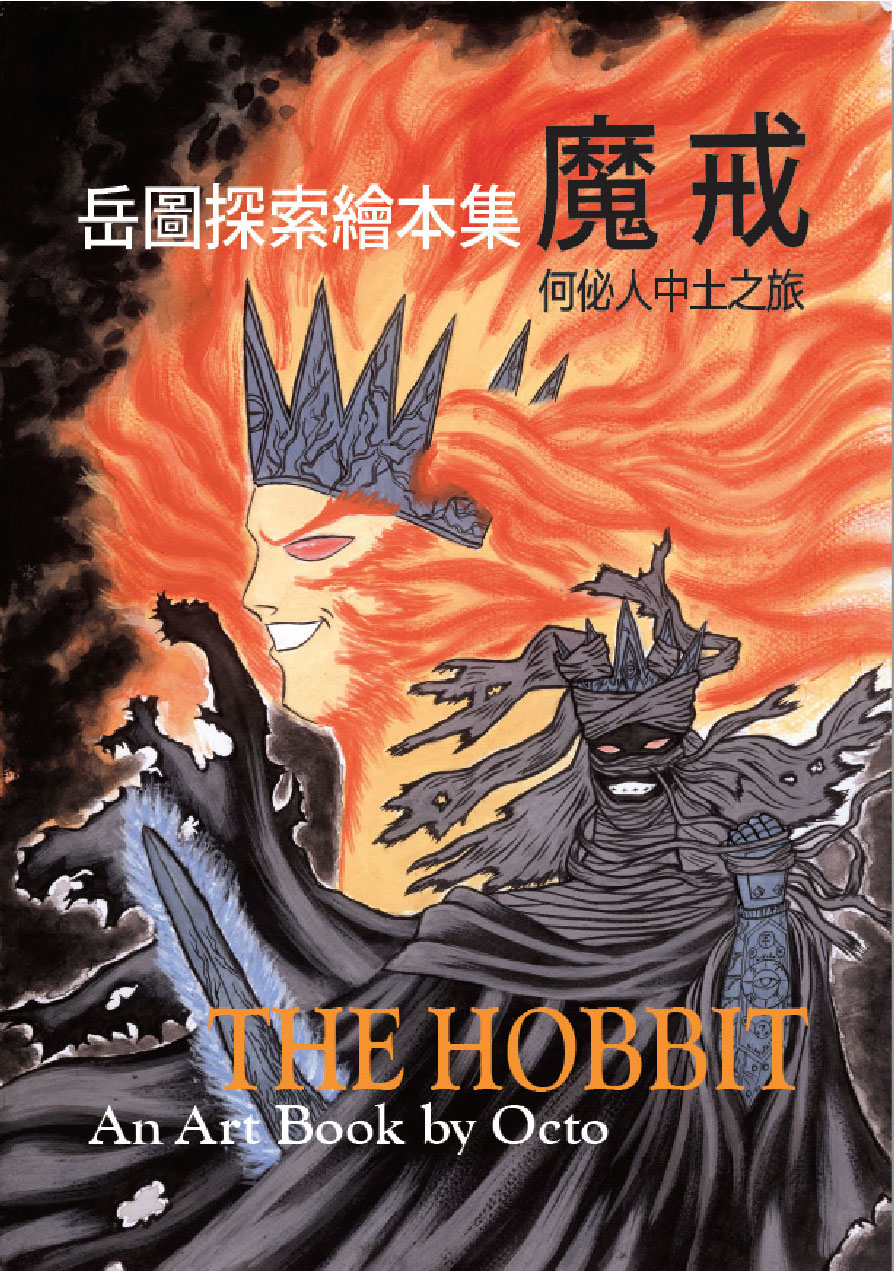
Octo Kwan is a Hong Kong Chinese artist with a particular interest in the work of J.R.R. Tolkien whose work has been printed in the Beyond Bree calendars as well as in UK Tolkien Society publications. Now he has his own art book, which introduces us to a new world of art inspired by Tolkien.
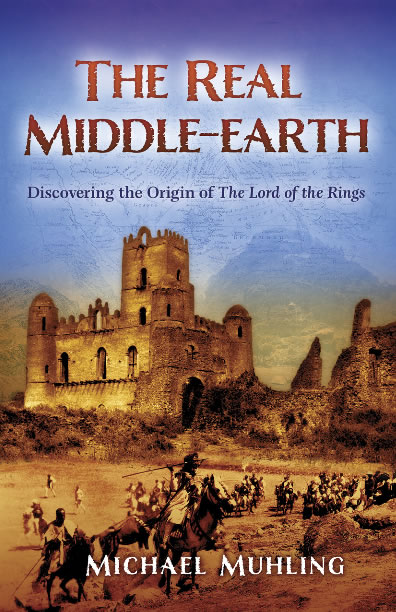
For decades, readers and scholars have searched for the real-world inspirations behind The Lord of the Rings. While Tolkien himself often downplayed direct influences, new theories continue to emerge—some more unexpected than others. This article explores one of the more intriguing and controversial ideas, suggesting that the roots of Middle-earth may lie far beyond the familiar landscapes of Northern Europe.
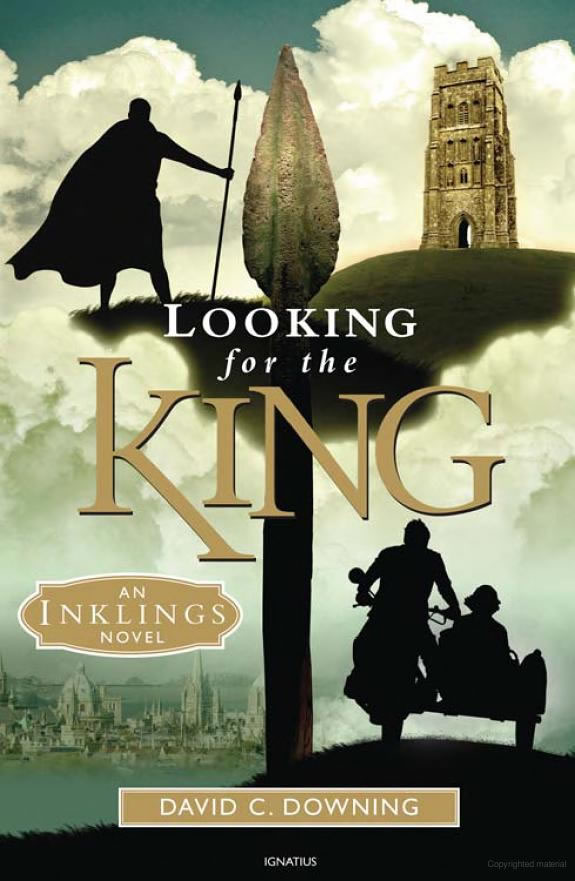
What if you could step beyond the pages of Tolkien’s works and walk the streets of Oxford alongside the Inklings themselves? Looking for the King invites readers into just such a world—where history, imagination, and myth intertwine. In this review, we explore a novel that brings J.R.R. Tolkien, C.S. Lewis, and their circle vividly to life, blending scholarly insight with a compelling narrative that captures both the spirit of the Inklings and the enduring magic of their ideas.